
Structural Drying for Water-Damaged Materials in Charlotte & Concord, NC
After the standing water is gone, a room can look dry and still be wet where it counts. Drywall, subfloors, cabinets and the cavities inside walls hold moisture long after the surface feels fine. Phantom Restoration provides structural drying in Charlotte & Concord, NC: drying those wet building materials in place and checking the readings until they are dry.
We start by asking what the water came from, which rooms it reached and whether it got into flooring or wall cavities. The EPA notes that wet materials can take days to weeks to dry, so we plan around the materials, not the calendar. Charlotte-area summers are humid, which slows drying, and the subfloor and joists under a house can stay wet after the water is out. Crawl spaces are where we started, and we dry them as carefully as we dry a kitchen.
Structural drying is one stage of our water damage restoration process. It comes after the bulk water is removed and before the handoff to repairs. If standing water is still in the property, water extraction comes first, since drying equipment works on moisture in materials and air, not on a pool of water.
Identify Which Assemblies Are Wet
An assembly is the set of layers that make up a floor, wall or ceiling: the finish, the drywall or subfloor, the insulation and the framing. Water doesn't stay in the layer you can see, so we check the assemblies room by room, including floors, subfloors, the edges of drywall, cabinets and any cavity we can reach. A stain is a lead, not the edge of the wet area, and moisture often reaches farther than the stain does. In a house over a crawl space, the wet layers are often the wood subfloor, the joists and the insulation between them. In a house on a slab, they are more often the walls, baseboards and flooring. The layers differ, but the question is the same: where is the moisture, and how much of it is there?
We use moisture meters to take readings and thermal imaging cameras to show us where to look, and we record the readings location by location so we can compare them later. We don't open every wall. We read the surface, then open or probe where the readings, the path of the water or the damage say moisture may be trapped. When hidden moisture is the open question, a water damage inspection records those readings and photos before any drying begins.
Set a Drying Plan After Bulk Water Is Removed
Drying starts after two things have happened: the source is controlled and the standing water is out. If water is still coming in, drying can't hold. A plumber fixes the pipe; we handle the water and the drying.
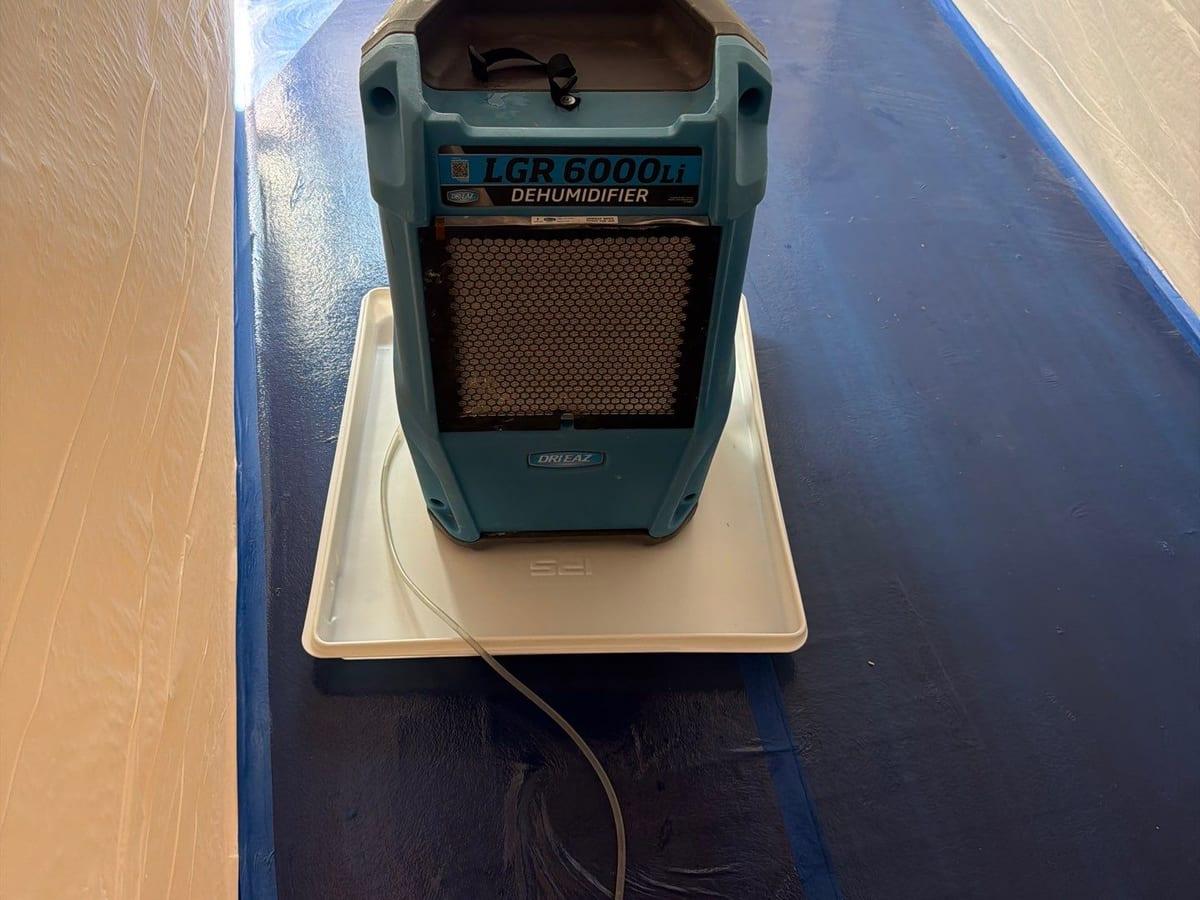
With those done, we build the plan around the materials that are actually wet. We use air movers to move air across wet surfaces and dehumidifiers to pull moisture out of the air, and we place them according to the readings. We don't run a standard setup on every job, because a hardwood floor, a wet wall cavity and a crawl space dry differently.
We also tell you what to expect before the equipment goes in: which rooms we need access to, where the equipment will run and that we'll come back to check the readings. We want you to know the plan, especially if you're still living in the home.
Dehumidification and Air Moisture During Drying
Dehumidifiers pull moisture out of the air, which helps wet materials give up their water. That's why they are part of most drying plans here, especially in summer, when the outdoor air is already humid. But a dehumidifier works on the air. It doesn't remove a pool of water, it doesn't fix a leak and, on its own, it doesn't dry a wet wall.
We match humidity control to what is wet. That means looking at the room, the wet surfaces, any enclosed spaces and the airflow, rather than treating one machine as the whole answer. We don't set a standard number of machines or a fixed placement. The readings and the layout decide.
We also measure the air and the materials separately. Air readings tell us whether the room is holding humidity down. Material readings tell us whether the drywall, subfloor or cabinet has actually dried. A room can feel comfortable while the assembly behind the paint is still wet, and one room-humidity number isn't a clearance for every material. So we take both, and we repeat them at the same documented spots.
Monitor Materials and Adjust the Plan
We pick baseline locations at the start and come back to the same spots to take readings in the same materials. That's how we see whether drying is working. Readings that move toward the readings of dry material mean it is; a spot that doesn't move means something needs a closer look. We keep a record of the changes, with photos and notes on any equipment we move.
When an area isn't drying as expected, we reassess before we extend equipment time. The cause might be water still getting in, limited access, an enclosed cavity or a material that is too damaged to dry. We don't use a universal moisture target or a timetable, because they vary by material and by building. The dry material in your own home is the benchmark we compare against.
This record becomes part of your documentation: photos, moisture readings and drying records.
Choose Drying or Removal by Material Condition
Not everything dries in place, and structural drying is not a promise to save everything. The decision depends on the material. Sound, accessible materials can usually be dried. Damaged, trapped or contaminated porous materials often can't.
Wet insulation, swollen cabinets and drywall that has started to crumble or sag may need to come out. Drywall that soaked up sewage or floodwater is a different case: the CDC advises throwing out materials like that, and sewage cleanup is handled as its own contaminated-water job. When we recommend removal, we tell you which material and why, and we remove it as part of the drying work. Once the structure is dry, we can also handle the replacement, such as drywall and cabinets, or work alongside your own contractor.
You're part of that decision. We explain what we see and what we recommend before material comes out, so nothing is removed without you knowing the reason.
What Happens When Drying Is Done
Drying is done when the readings show the materials are dry, not when the room feels dry. At that point we check the areas we assessed one more time and write down what we found: which areas reached dry readings, which materials were removed and any area that still needs attention. We don't pull equipment early because a surface looks fine.
Once everything is dry and documented, repairs can begin. We give you the drying records your adjuster needs, and we can also handle repairs such as drywall, flooring and cabinets. If you already have a contractor, we'll give them the drying records and work alongside them.
We work with all insurance companies. We document the damage with photos, moisture readings and drying records and share them with your adjuster. Your policy and your insurance company decide what's covered. We can't promise a particular insurer decision, and we don't promise a specific drying result before we've seen the job.
Request Structural Drying in Charlotte & Concord, NC
If your property needs structural drying after water damage, call (980) 501-1879. We answer 24/7 and send a crew as soon as we can. Tell us what the water came from, which rooms it reached, what the floors and walls are made of, whether the standing water has been removed and whether any part of the structure that you can't reach may be wet. A site assessment decides the scope for drying and for removal. You can also reach us through our contact page. We serve Charlotte & Concord, NC and the surrounding area.