
Burst Pipe Cleanup for Water-Damaged Rooms in Charlotte & Concord, NC
A burst pipe puts a lot of water into a house quickly, and it keeps coming until someone stops it. Around here, winter freezes are a common cause. A supply line in a crawl space, an attic or an outside wall freezes, splits and floods when it thaws. Because many homes in the Charlotte region sit on crawl spaces, the water often runs under the floor where nobody sees it at first. If it ran under yours, we handle it as crawl space flooding, which means getting into a low, tight space and checking the joists and subfloor above. If the water came from an appliance supply line or hose instead, we handle it as appliance leak cleanup.
Our job starts where the plumber's job ends. A plumber fixes the pipe; we handle the water and the drying. We remove the water the pipe released, find out how far it went, take out what it ruined and dry what stays. If water is still flowing, stop it first, and then call us at (980) 501-1879. We answer 24/7 and send a crew as soon as we can. Burst pipe cleanup is the same water damage restoration sequence we use on every loss, adjusted for where the pipe failed.
Stop Water Entry and Check Safe Access
If water is still flowing, stop it before anything else. If you know where your home's water shutoff valve is and can reach it without stepping into water, close it. If you can't reach it safely, call a plumber or your water utility. We don't shut off water or take over source control for you, and we won't ask you to do anything unsafe over the phone. Tell us on the call whether the pipe is still running.
When you call, we'll also ask where the pipe broke, how many rooms or floors are wet and whether anyone has been near electrical equipment. Write down what you can see from a safe spot, and don't take a risk to get a better look.
Then think about safety. Don't walk through standing water to reach a breaker or a switch, and keep clear of any room where water is coming through a ceiling or a light fixture. The CDC advises calling an electrician if you can't reach your main switch from a dry spot. We can start once it's safe to work.
If the Break Is in the Main Water Line
Sometimes the break isn't inside the house. A leak in the line that brings water to your home can show up as wet or soggy ground in the yard, low water pressure, a water meter that keeps moving when everything inside is off, or water coming into a basement or crawl space. If you think the break is outside, call your water utility or a plumber. Don't try to shut off a main line you can't identify.
Who owns that line varies. It may belong to the water utility, to you or to both, depending on where the break is, and the utility or a plumber has to confirm which. Finding and fixing a buried line is their work. We don't locate or repair water mains or service lines. We handle the water that got into your house: removing it, checking the materials and drying them. Water that has run through soil and into a building can pick up contamination on the way, so we assess it before deciding what can be dried. If it reached a basement, it's basement flooding, and the first concern there is electricity and standing water.
Map the Water Path Across Rooms and Levels
The puddle you can see is rarely all of it. Water from a burst pipe runs along floors, soaks into the bottom of walls, drips into the ceiling below and works its way under cabinets. So we look below and beside the break: the ceiling under an upper floor, the cabinets, the base of the walls, the flooring, and the crawl space underneath if you have one. We use moisture meters and thermal imaging cameras to follow the moisture instead of guessing. A break in an upper-floor wall or an attic can wet every level below it, because water follows the framing down. A stain on a first-floor ceiling can come from a pipe on the floor above, so we check the cavities between floors and not only the room where the water showed up. A line break doesn't automatically mean every room is damaged, either, and readings let us say which rooms are wet and which are not.
If water came through a ceiling, we check the ceiling water damage overhead as well, because insulation and drywall above can stay wet after the floor dries. If you're not sure where the water is coming from, a water damage inspection traces where the moisture has traveled, which helps narrow down where it started. A plumber still has to fix the pipe.
Extract Pooled Water and Assess Contents
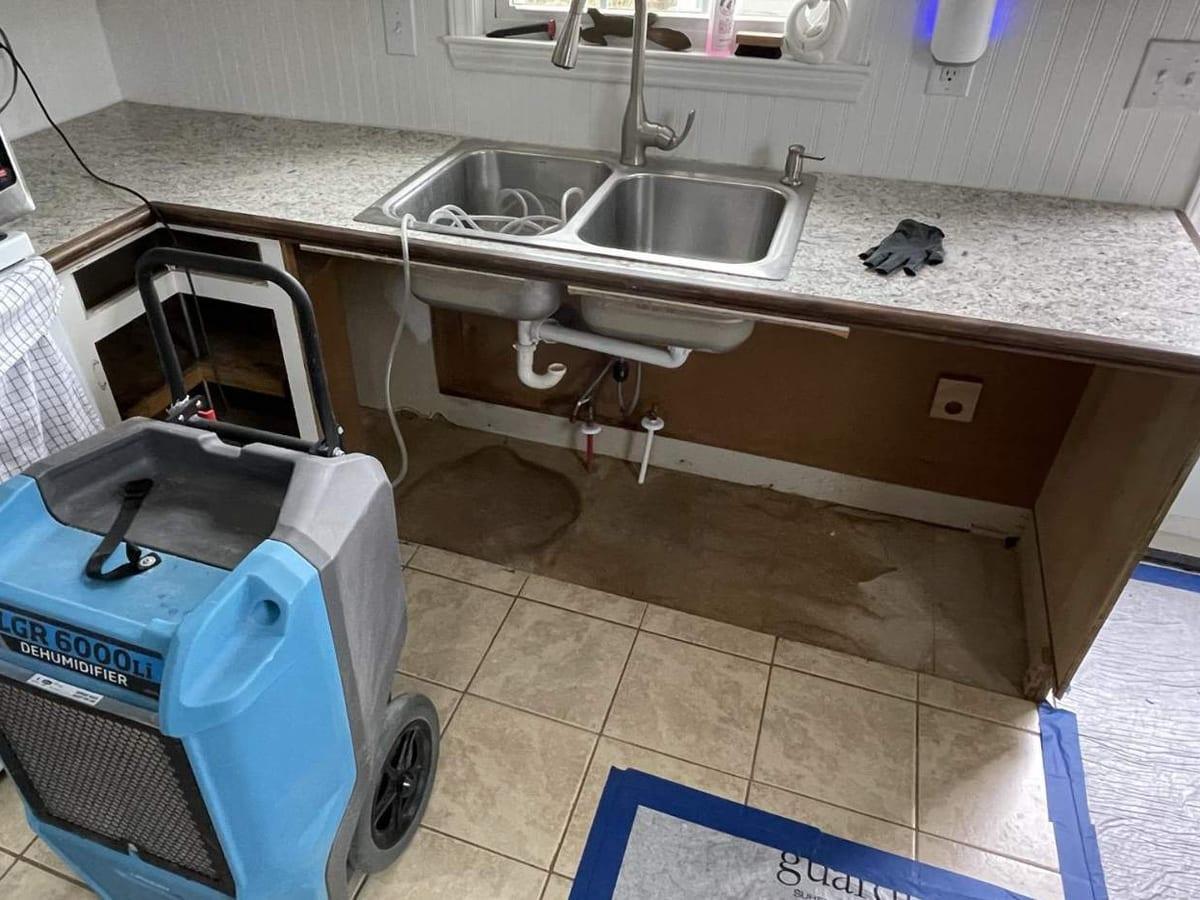
Where it's safe to get in, water extraction takes out the pooled water with extraction equipment, starting where it is deepest. Then we look at what was in the water's path: rugs, furniture, boxes, and the things stored in cabinets and closets. Cabinet bases and the toe-kick area are worth checking too, because water collects there and the damage is hidden behind the doors. We can pack belongings out of the wet area and pack them back in when the work is done. We don't restore contents ourselves, so if an item needs a specialist, we'll tell you. If you can do it safely, photograph your belongings where they are before anything is moved.
Dry or Remove Affected Building Materials
The pipe can be fixed while the walls are still wet. After the standing water is out, we take readings in the floors, walls and ceilings to see what's holding moisture. Materials that can be dried get air movers and dehumidifiers. Materials that can't be dried, like soaked insulation or drywall at the bottom of a wall, come out. Water from a supply line may start clean, but we don't assume it stays that way once it has soaked through a house, so we check what it touched before deciding what can be dried. We tell you what we're taking out and why, and we show you the readings behind the decision. If sewage is involved, it becomes a sewage cleanup job, and the contaminated material is dealt with before any drying.
EPA says drying can take a long time, usually several days to weeks. That is why we go by readings and not by a calendar. That is structural drying, and the repeat readings decide when the equipment comes out.
Document Pipe Repair and Cleanup Separately
Keep two sets of records: one for the pipe and one for the water. The plumber's invoice and notes show what broke and how it was fixed. Our records show what the water did: photos, moisture readings and drying records, plus which materials we took out. Keeping them separate makes each one easier to follow. Ask your plumber to put the date and the location of the break on the invoice, and keep any photos you took before the cleanup began. Our records pick up from there.
We work with all insurance companies. We document the damage with photos, moisture readings and drying records and share them with your adjuster. Your policy and your insurance company decide what's covered.
Once everything is dry and documented, repairs can begin. We give you the drying records your adjuster needs, and we can also handle repairs such as drywall, flooring and cabinets. If you already have a contractor, we'll give them the drying records and work alongside them.
Request Burst Pipe Cleanup in Charlotte & Concord, NC
Call (980) 501-1879. We answer 24/7 and send a crew as soon as we can. Tell us where the pipe broke, whether the water has stopped, which floors or rooms are wet, how much water is pooled and whether it's safe to get in. Pipe repair is confirmed separately with your plumber, and our cleanup scope follows what we find. After we inspect, we give you a written scope of the work.