
Professional Mold Removal for Visible Mold Problems in Charlotte & Concord, NC
If you can see mold on a wall, ceiling, floor, trim, wood or drywall, it should be handled before it spreads or returns. Our mold removal team in Charlotte, Concord and the surrounding area helps you work out how far it goes, removes visible mold from surfaces that can be saved, takes out materials that can't be cleaned, and connects the cleanup to the moisture problem that caused it.
We start with a free mold inspection. We look for visible growth and check moisture. Then we give you a written scope, so you know what comes out, what gets cleaned and what happens next.
Mold almost always means water somewhere: a leak, a damp crawl space, a summer that never let a room dry out. Removing the growth is half the job. The other half is the moisture. Our mold remediation work covers both halves.
What The Mold Removal Service Covers
Our mold removal service covers visible mold on hard, semi-porous and porous building materials. We clean surfaces that can be cleaned reliably. We remove drywall, insulation, carpet, ceiling tile and other porous materials when cleaning won't work. We detail clean the area with HEPA air filtration running, and we tell you what's feeding the moisture. Each material behaves differently, so here is how they break down.
Mold Cleanup for Walls, Ceilings, and Trim
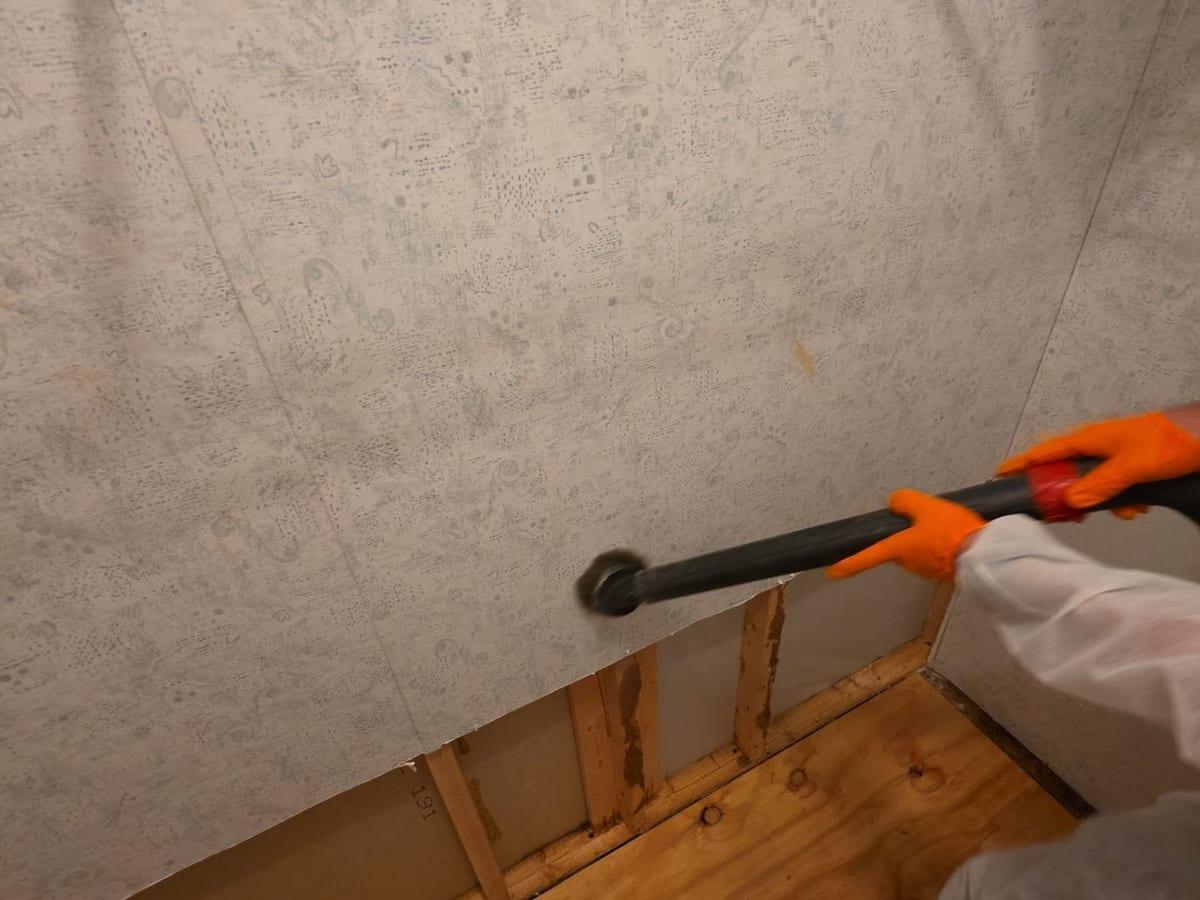
Mold on walls, ceilings and trim usually comes from a leak, condensation, humidity or earlier water damage. We look at how far the growth goes and whether the material under it is damp or soft. Growth on hard, sealed surfaces can often be cleaned. Growth that has soaked into drywall can't, and that section comes out. A stain on a ceiling can also mean water above it, so we check the area around the stain, not just the spot.
Mold Removal From Wood and Framing
Sound wood can sometimes be cleaned and dried. How deep the mold goes, how long the wood was wet and whether it carries load all decide what's possible. We check how wet the wood is and tell you what we see. If you're worried about structural strength, that's a question for a qualified specialist, and we'll say so rather than guess. A quick surface treatment is no substitute for finding and drying the moisture behind it.
Mold on Drywall, Carpet, and Porous Materials
Drywall, carpet, insulation and ceiling tile are porous. Mold can grow into them, not just on them, so wiping the surface rarely works. When growth has taken hold, these materials usually have to come out, and we remove, bag and clean up. Carpet and padding with growth come out. We remove, clean, dry and document, and once it's dry we can put back the drywall and flooring, or work alongside your own contractor.
DIY Mold Removal vs. Professional Mold Removal
Some homeowners can handle a small spot on a hard, non-porous surface with the right protection. The EPA's homeowner guide describes how. Don't mix cleaning chemicals, and don't scrub, sand or brush dry mold, because that can put spores in the air.
Leave it to professionals when the growth covers a larger area, keeps coming back, sits inside a wall or on porous materials, followed flooding or sewage, or when anyone in the home has health concerns. If you think mold has reached your heating and cooling system, don't run it until an HVAC professional has looked at it. If mold keeps returning after you've cleaned it, the moisture source hasn't been solved.
Mold Removal vs. Mold Remediation
At Phantom, removal and remediation are the same service. Mold removal is the term most people search for, and it usually means cleaning or taking out the affected material. Remediation is the broader plan around it: finding the moisture, containing the work area, drying and documenting what was done. Many real projects need both, and we do both. Our mold remediation work follows that full plan, from the first moisture check to the final record.
Our final cleaning and documentation is a record of our own work, not independent clearance. If you or your insurance company want independent clearance testing, a third-party assessor can do it.
When to Call a Mold Removal Company
Call us when the mold covers more than a small, isolated area, or when it comes back after cleaning. Call when it followed a water problem: a damp crawl space, a pipe that burst in a freeze, an appliance leak, storm water, a roof or plumbing leak. Call when it's on porous materials such as drywall, carpet or insulation, or when you smell mustiness and can't find the source. If your home has a basement and it has stayed damp, that counts too.
If anyone in the home has asthma, allergies, a chronic lung condition or other health concerns, talk to a health professional, and leave the cleanup to us. If you're not sure, a free mold inspection is the simplest way to find out.
How Professional Mold Removal Works
Every job is different, but the steps are the same:
- Inspect the mold and the moisture. We start with a free mold inspection. We look for visible growth and check moisture, so we know what we're dealing with before anything is touched.
- Protect nearby areas and contents. Plastic containment separates the work area from the rest of your home, and we protect what's close by.
- Remove unsalvageable materials. Drywall, insulation, carpet and other porous materials with growth come out and are bagged.
- Clean salvageable hard surfaces. Surfaces that can be cleaned reliably are cleaned.
- Detail clean the area. HEPA air filtration runs during the work, and we clean carefully so dust is captured, not spread.
- Dry and tell you what's feeding the moisture. Air movers and dehumidifiers dry what's left, and moisture readings tell us when it's dry. A plumber fixes the pipe and a roofer fixes the roof; we handle the mold and the drying.
- Confirm next steps. We go over what we did and what happens next. Once everything is dry and documented, repairs can begin. We give you the drying records your adjuster needs, and we can also handle repairs such as drywall, flooring and cabinets. If you already have a contractor, we'll give them the drying records and work alongside them.
Common Places We Remove Mold
Mold can show up almost anywhere in a house, but a few places account for most of the calls we get.
Crawl Space Mold
Many homes in the Charlotte region sit on crawl spaces. Ground moisture, red-clay soil that drains slowly and humid summers can keep one damp, and mold grows on joists, subfloor and insulation. Our crawl space mold removal cleans the framing that can be saved, takes out insulation that is damp or has growth on it, and dries the space.
Attic Mold
A roof leak, a bathroom fan that vents into the attic, or humid air that condenses on cold sheathing in winter can all leave mold on attic wood and insulation. Your roofer fixes the roof; we handle the mold. Our attic mold removal starts with how far the growth goes on the sheathing and how damp the wood is.
Bathroom Mold
Bathroom mold usually comes from steam and poor ventilation, or a slow leak around a tub, shower or toilet. On tile and sealed surfaces it can often be cleaned. On wet drywall or ceiling material, it may have to come out. A plumber fixes the leak; we handle the mold and the drying.
Mold After Water Damage
Mold often follows a flood, a burst pipe or storm water that wasn't dried quickly. If you've just had water damage, call our water damage restoration team first, because quick drying helps keep mold from starting. We work with all insurance companies. We document the damage with photos, moisture readings and drying records and share them with your adjuster. Your policy and your insurance company decide what's covered.
Basement Mold
If your home has a basement, foundation moisture, leaks and humidity can leave mold on walls and framing. Basements are less common here than crawl spaces, but the approach is the same: find the moisture, remove what can't be cleaned, clean what can, and dry the space.
Black Mold Removal Concerns
"Black mold" is what most people call dark visible growth. Many dark molds look alike, and color alone doesn't tell you the type; only lab testing identifies it. Larger or returning dark growth is worth having inspected, and our free mold inspection is the place to start.
What to Do If You Find Suspected Black Mold
If you find dark growth, leave it alone. Here is what to do next:
- Don't disturb it. Scrubbing, sanding, brushing or pointing a fan at dry mold can put spores into the air and spread them to clean areas.
- Keep the area closed off and undisturbed. Close the door, keep people and pets out, and don't run a fan or your heating and cooling system toward it.
- Shut off the water if a leak is feeding it. Turn off the supply to a leaking fixture if you can do it safely. A plumber fixes the pipe; we handle the mold and the drying. Don't take walls or fixtures apart to chase the leak.
- Take photos before anything changes, and note where the water came from. Photos can be shared with your adjuster.
- Call us. We look for visible growth, check moisture and tell you what we see.
If anyone in the home has health concerns, talk to a health professional. If you want to know what type of mold it is, ask about mold testing, because only lab testing identifies the type. Testing doesn't change the cleanup: visible mold and the moisture feeding it need to be dealt with either way.
Schedule Mold Removal in Charlotte & Concord, NC
If visible mold is spreading, returning after cleaning, or growing on drywall, wood, carpet or other building materials, call our mold removal team. We start with a free mold inspection: we look for visible growth and check moisture, explain what can be cleaned and what has to come out, and give you a written scope after we inspect.
Call (980) 501-1879. We answer 24/7.