
Sewage Cleanup After Backups and Contaminated Flooding in Charlotte & Concord, NC
If sewage has come up through a toilet, a tub, a shower or a floor drain, treat the water as contaminated and keep people and pets out of the affected rooms until the area has been assessed. That is the advice in CDC guidance on cleaning up after sewage and floodwater, and it applies whether the backup covers a bathroom floor or a whole level of the house. When you call us at (980) 501-1879, we ask where the water came up, whether it is still coming, which rooms and materials it reached, and whether it looks like a sewer line, a septic system or a toilet that overflowed. Those answers set the plan for the whole job.
Water is sorted into three categories by how contaminated it is, and sewage sits in the most contaminated one, Category 3. Category 1 comes from a clean source, such as a supply line. Category 2 carries some contamination, such as water from a washing machine or dishwasher. Category 3 is grossly contaminated: sewage, water from a sewer or septic backup, and floodwater that came in from outside. Sewage is Category 3 from the moment it leaves the pipe, and clear-looking water is not proof that it is clean. Clean water that has sat for a long time or passed through a dirty building can also be treated as a higher category. The category changes what can be cleaned and dried and what has to be removed. Every water damage restoration job starts by sorting the water into these categories, and with a contaminated backup the category shapes nearly every step that follows.
Backups tend to show up at the lowest drain in the house. In Charlotte-area homes, that can be a floor drain in a basement, if your home has one, a ground-floor bathroom or laundry room, or a crawl space where a failed drain line has been releasing water under the floor where no one sees it. Crawl spaces are where we started, so we check under the house when the drain lines run there. Summer thunderstorms and tropical-storm remnants can send stormwater into a home and strain a sewer line or a septic system, and red clay soil drains slowly, which can keep the ground around a septic system saturated longer after heavy rain.
Identify the Backup Source and Limit Access
Before we remove anything, we need to know how the water got in. We note where it came up, whether it is still flowing, which rooms it reached, and which doorways, floors and stairs it crossed. That tells us where people can safely walk, where plastic containment goes up to keep contaminated water and dust out of dry rooms, and what has to be handled first. Until we arrive, keep your family and pets out of the affected rooms, and avoid running the washing machine, dishwasher or showers while a backup may still be active, because that sends more water into the same line.
A plumber or sewer specialist fixes the failed drain, sewer line or septic problem. We handle the contaminated water, the removal of materials that can't be saved, the cleaning and the drying. If the source hasn't been fixed, the backup can come back, so tell us early if no one has looked at the line yet. If your home is on a septic system, EPA guidance on flooded septic systems points homeowners to a septic professional, and we work around whatever that professional finds.
Water that comes in from outside during a storm can carry sewage with it, so we don't treat floodwater or any backup as clean because it looks clear. If your home has a basement and the water came in from below grade, that is basement flooding, and if any of it is sewage, we treat the whole job as contaminated.
Standing water and electricity are a dangerous combination. If your electrical panel or a main switch is in or next to the water, don't wade in to reach it. Call an electrician or your utility. We don't do electrical work, but we can tell you what to avoid until a crew arrives.
Remove Contaminated Water and Assess Porous Materials
Once the area is contained, we take out the standing water with extraction equipment, room by room. Getting the water out first stops it from spreading into more material and lets us see what the floors and walls actually look like. Water extraction is the same bulk water removal we do on any loss, but sewage adds a second job to it: deciding which materials the water has contaminated beyond saving.
Absorbent materials are the hard part. Carpet and padding, drywall, insulation and upholstered items that sewage has reached are difficult or impossible to clean and dry properly, and flood-cleanup guidance from the CDC and EPA treats contaminated porous materials as items to remove and throw away. We don't treat that as automatic for everything in the room. Hard surfaces can have a cleaning route after assessment, and we decide material by material, not room by room.
In practice, tile, sealed concrete and framing lumber can usually be cleaned and dried in place. Carpet, padding and insulation that sewage reached usually come out. Drywall depends on how high the water rose and how long it sat, so we check it with moisture meters and mark where it needs to be cut rather than guessing from the stain. A stain on the surface doesn't always show how far the water traveled, and a dry-looking wall can still hold moisture behind it, so we check past the visible edge. We tell you what we're removing and why before it comes out.
Clean, Dry, and Document the Affected Area
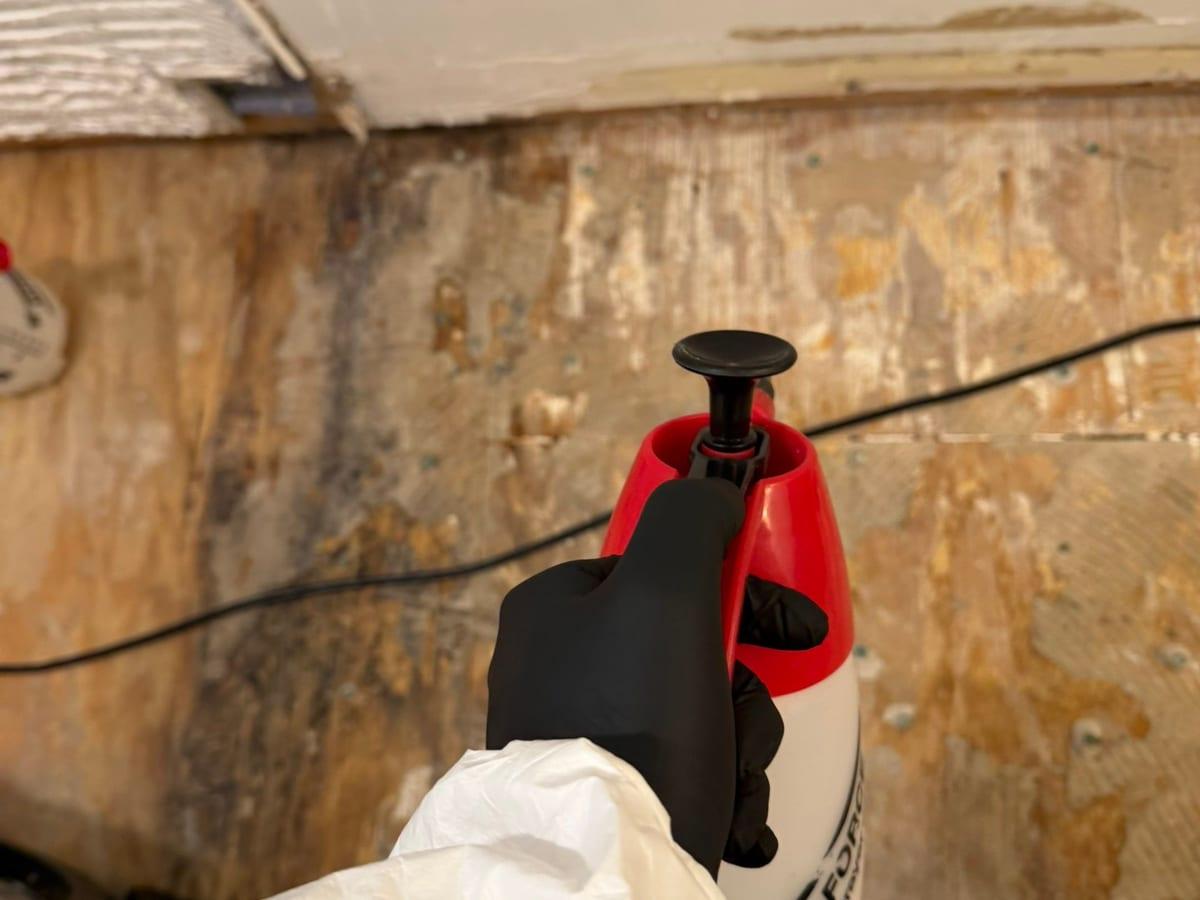
Taking out the water and the soaked materials is not the end of the job. The surfaces that stay still carry residue, and the structure around them is still wet. After removal, we clean the hard surfaces and framing that can stay, using methods suited to each surface. Porous materials that sewage soaked are removed, not cleaned.
Then the structure has to dry. We set air movers and dehumidifiers, add HEPA air scrubbers to filter the air in the work area, and take moisture readings on every visit so that drying is measured, not assumed. Structural drying continues until the readings show that the walls and subfloor the backup soaked are dry.
Odor after a backup usually comes from absorbent material that held sewage or from moisture left in the structure, which is why removal and drying matter more than anything applied afterward. We can't promise that every smell will be gone, and we don't offer odor treatment as a separate service.
We document the work as we go: photos of the affected rooms, moisture readings from each visit, and a record of what we removed and why. We also note any source work that is still open, such as a plumber's visit that hasn't happened yet. Those records are what your adjuster and whoever does the repairs will ask for.
What Happens When Cleaning and Drying Are Done
A backup comes back if its cause isn't fixed, so the failed drain, sewer line or septic problem needs a plumber or sewer specialist before anyone closes up walls or lays new flooring. We note on our records whether that has happened, and we tell you plainly if the source is still open when we finish.
Once everything is dry and documented, repairs can begin. We give you the drying records your adjuster needs, and we can also handle repairs such as drywall, flooring and cabinets. If you already have a contractor, we'll give them the drying records and work alongside them.
If you see visible mold growth during or after a backup, that is assessed separately from the sewage cleanup, and handled as mold remediation if it's found. We offer a free mold inspection: we look for visible growth and check moisture.
Request a Sewage Cleanup Assessment
If sewage is backing up now, call (980) 501-1879. We answer 24/7 and send a crew as soon as we can. We handle sewage cleanup in Charlotte & Concord, NC and the surrounding area from our offices in Concord and Charlotte.
When you call, have a few details ready: which fixture or drain the water came from, whether it is still coming up, which rooms it reached, and whether everyone can stay out of the space. Please don't go into the affected area to collect details or take photos. Tell us what you can see from a safe doorway, and we'll take it from there.