
Commercial Water Damage Restoration for Occupied Buildings in Charlotte & Concord, NC
Water in a commercial building rarely stays in one room. It runs under partition walls, drips through ceiling tiles into the floor below, soaks the carpet in the next suite and wicks up drywall. Phantom Restoration provides commercial water damage restoration in Charlotte & Concord, NC, and across the Charlotte region. We find where the water went, extract it, dry the structure and document every step for you and your adjuster.
If you own or manage any kind of commercial property, from an office, shop or restaurant to an apartment building, church or warehouse, call (980) 501-1879. We answer 24/7 and send a crew as soon as we can. Tell us where the water is, whether it's still running, whether anything electrical is wet, which areas are occupied and who can let the crew in.
If it's safe, shut off the water at the source and take photos before anything is moved. Keep people away from water that's near outlets or electrical equipment.
Map the Water Source and Affected Work Zones
Before any equipment goes in, we need to know two things: where the water came from and where it went.
The source decides how we handle the water. A broken supply line or a fire sprinkler release usually starts as clean water. A drain or sewer backup, or floodwater from outside, is treated as contaminated; the EPA and CDC both advise treating floodwater and sewage that way. Clean water doesn't stay clean, either. If it sits, or runs through dirty materials, it becomes a different job. We decide the category from the source and what we find on site.
Then we follow the water. We use moisture meters and thermal imaging cameras to check floors, walls, ceilings and cabinets, and we record which floors, rooms, suites, storage areas and equipment rooms are affected. In a building with several tenants, that often means checking the space next door and the floor below, not just the room where the water showed up. That record becomes the drying plan and part of your documentation.
We don't work where water may be in contact with live electrical equipment until the power is safely off; that's a call for an electrician or your facilities team. If the water is still coming from a pipe, a plumber fixes the pipe; we handle the water and the drying. Our water damage restoration page explains water categories and the full process in more detail.
Remove Water, Assess Materials, and Set a Drying Plan
Removing the water, deciding what can be saved and drying the structure are three separate decisions, and we make them in that order.
Extraction comes first. We remove standing water from floors, carpet and low areas with extraction equipment, because every bit of water we pull out is water the drying equipment doesn't have to deal with. Our water extraction work covers this step.
Then we look at each material. Drywall, insulation, carpet and pad, ceiling tile, flooring and cabinets don't all behave the same way. Some can be dried in place. Some soaked up too much, or were reached by contaminated water, and have to come out. We don't promise to save a material until we've inspected it and tracked the readings, and we tell you what we'd dry and what we'd remove before anything is removed.
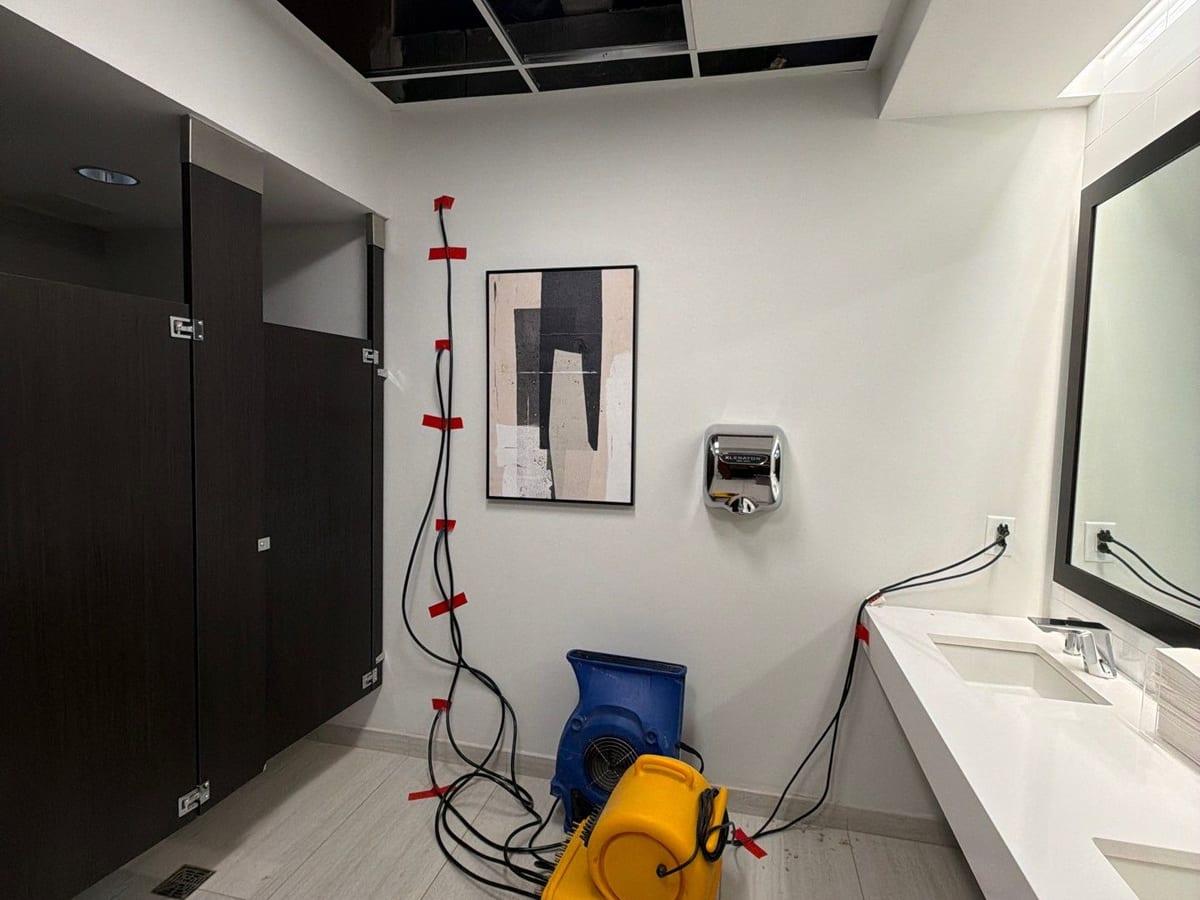
Then we dry. We set air movers and dehumidifiers, take readings throughout the drying period and adjust the setup as materials dry. That's structural drying, and it usually takes longer than extraction. We can't give you a drying time in advance, because it depends on the materials, how much water there was and the conditions inside the building. Humid Charlotte-area summers slow drying down, which is one more reason readings matter more than a calendar.
Plan Work Zones Around Your Operations
Drying equipment runs around the clock, makes noise and takes up floor space, and containment closes off parts of a building. In an occupied building, that has to be planned with the people who run it.
We can work whenever you allow, including after hours. Planning starts with which areas are affected and which aren't, which routes staff, tenants or customers use, which systems the business depends on and where the equipment can go. Where it helps, plastic containment separates the work area from the rest of the building.
We'll tell you honestly what can stay open. Whether people keep using unaffected areas is your decision, and sometimes the building authority's, based on hazards like wet electrical equipment, contaminated water or ceilings that have taken on water. A drying plan on its own doesn't make a space safe to use. Our commercial restoration services page covers how we work with owners and managers across fire, mold and storm damage as well.
Document the Loss and Plan What Comes Next
We work with all insurance companies. We document the damage with photos, moisture readings and drying records and share them with your adjuster. Your policy and your insurance company decide what's covered.
That record covers where the water came from, which areas and materials were affected, what we removed, the readings we took and when, and when the readings showed the materials were dry. Keep your own photos too, along with receipts for any emergency costs.
Fixing the source is separate from our work: a plumber fixes the pipe, an electrician deals with wet electrical equipment and a roofer deals with a roof leak. Once the space is dry and documented, we also handle repairs after mitigation, such as drywall, flooring and cabinets. If water sat long enough for mold to start, that's a separate job, covered on our commercial mold remediation page.
Discuss Commercial Water Damage Restoration in Charlotte & Concord, NC
If water is spreading through a building you own or manage, call Phantom Restoration at (980) 501-1879. We answer 24/7 and send a crew as soon as we can. Tell us the address, where the water came from, which areas are affected, whether the building is occupied and how the crew gets in.
We'll map the water, remove it, set up drying, document the work and give you a written scope after we inspect. We're a local company with offices in Concord and Charlotte, in business since 2022. Financing is available — ask us for details.