
Smoke Damage Restoration After Fire Residue in Charlotte & Concord, NC
Smoke can affect areas well beyond the fire. After a kitchen fire, a fireplace problem, an appliance fire or smoke that came in from another unit, the residue it leaves behind varies from room to room, and so do the materials it landed on. Phantom Restoration provides smoke damage restoration in Charlotte & Concord, NC. We assess the residue, decide how each surface and material should be handled, and clean or remove it.
Before you clean anything yourself, please call. Scrubbing soot, washing walls or spraying household odor products on smoke-affected surfaces can push residue deeper or cover the smell without removing it. Call (980) 501-1879, and we'll tell you what to do and what to leave alone. We answer 24/7 and send a crew as soon as we can.
Our crews work out of offices in Concord and Charlotte and serve homes and businesses across the Charlotte region. When smoke damage comes with debris, burned materials or firefighting water, we handle that through our fire damage cleanup, which removes the debris and burned materials and dries the water left behind.
What Smoke Damage Can Affect
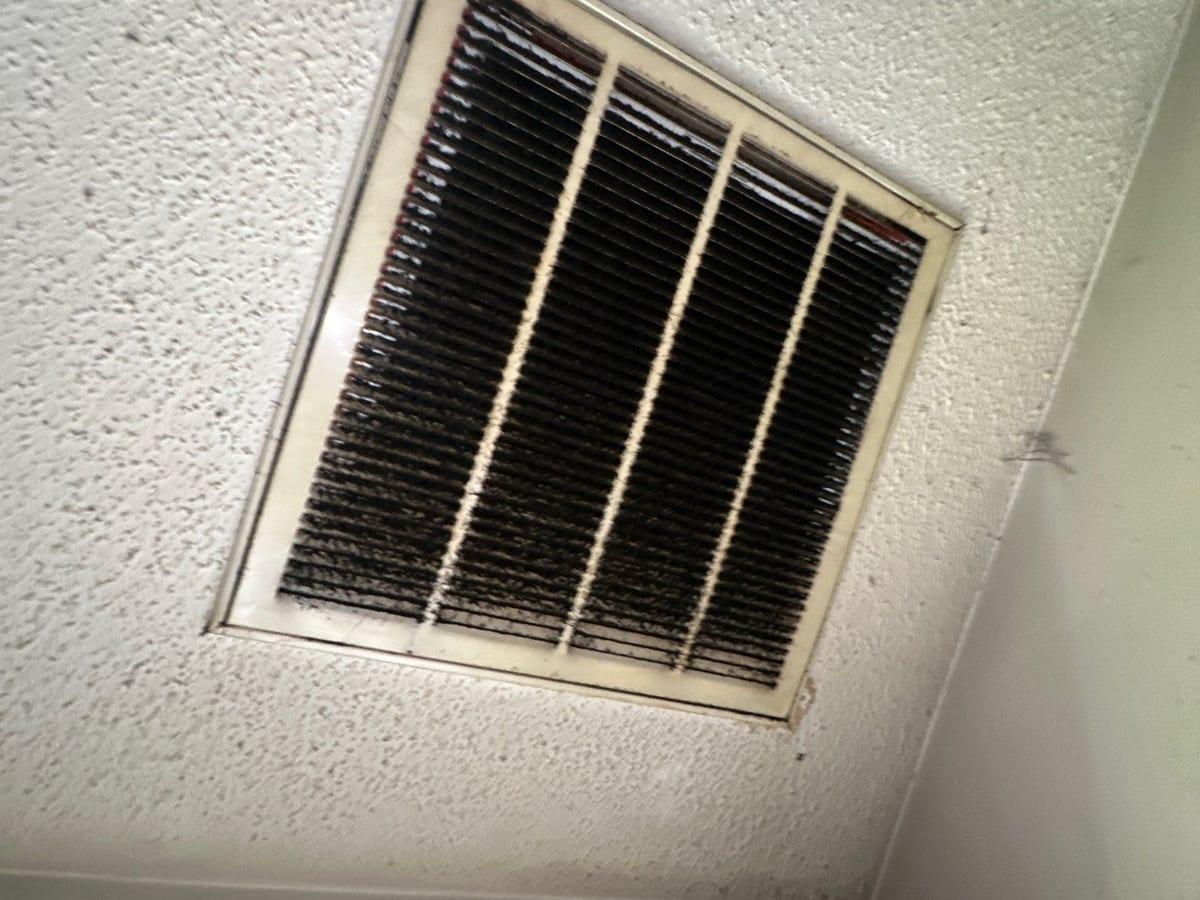
Smoke is a mix of fine particles and gases, and it goes wherever air goes. That means it can reach rooms behind closed doors, closets, the inside of cabinets, and the spaces inside walls and above ceilings. It settles on cooler surfaces first and works into anything porous.
In a typical smoke job we look at walls and ceilings, cabinets and shelving, flooring, insulation, clothing and fabric items, and the belongings stored in drawers and closets. Porous materials like drywall, unfinished wood, insulation and fabric are the ones most likely to hold on to residue and smell. Hard, sealed surfaces are usually easier to clean. A room can look untouched and still have residue in it, which is why we inspect rooms that seem fine as well as the ones that don't.
Smoke Residue, Soot, and Staining
Smoke residue isn't one thing. It can be a thin film, a heavy layer, a smear or a stain, depending on what burned, how hot it was and how long the residue has been sitting. The material underneath matters just as much: the same residue behaves differently on a painted wall, a kitchen cabinet and a ceiling with a textured finish.
We don't guess which cleaning method will work. We inspect the affected surfaces, test a small area, and see how the residue and the material respond before we commit to a method for the whole room. Some staining comes off. Some doesn't, and when it won't, we say so rather than promise. Soot, which is the dark particle residue left by combustion, settles on walls, ceilings, cabinets and almost anything else, and our fire damage cleanup work looks at where it reached and what it's sitting on before picking a cleaning method.
The Smoke Damage Restoration Process
The steps below show how a smoke job usually goes. The order stays the same, but the scope changes a lot between one smoky room and a whole house.
Inspection and test cleaning
We walk the property and note where residue is, what surfaces it's on and how heavy it is. Then we test-clean a small area on each type of material, so we know what will lift the residue before we start on the rest. We don't do laboratory testing of residue. What we rely on is looking at it and seeing how the surface responds.
Ventilation and containment where needed
Smoke cleaning can stir up residue, so on jobs that call for it we hang plastic containment and run HEPA air scrubbers to keep it out of the rooms we aren't working in. Please don't turn on heating or cooling systems that smoke may have reached until an HVAC professional has checked them, since running them can move residue through the house.
Cleaning and residue removal
We match the cleaning to the material and its condition, then check the result before moving to the next area. Where a surface cleans well, we clean it. Where residue has soaked into a material that can't be cleaned properly, we recommend removing it, and we explain why.
Contents evaluation
We look at the belongings in the affected rooms and note what the smoke reached. We pack contents out of the work area and pack them back in when the work is done. We don't restore contents ourselves, so if an item looks like it needs a specialist, we tell you instead of promising it can be saved. We note what's affected with photos so you have a record.
Odor source reduction
Once the residue is dealt with, we look at what's still holding the smell. Reducing odor means cleaning the remaining residue and removing materials that can't be cleaned. We can't promise a smell disappears completely, because that depends on what absorbed the smoke and how far it spread.
Final review
Before we wrap up, we walk through the property with you and go over what was cleaned, what was removed and what, if anything, is still a concern. Once the property is cleaned and secured, repairs can begin. We give you the photos and cleaning records your adjuster needs, and we can also handle repairs such as drywall, flooring and cabinets. If you already have a contractor, we'll give them the records and work alongside them.
Smoke Odor After a Fire
Smoke odor starts with source removal. The smell in a smoke-damaged house comes from residue sitting on and inside materials, so cleaning that residue and removing what can't be cleaned comes before anything else. Air fresheners, sprays and ventilation alone don't remove the source, and they only cover it up for a while.
How much work the odor needs depends on how much residue there is, what it's in and how severe the smoke exposure was. Porous materials like insulation, unfinished wood and soft drywall tend to hold odor longer than hard, sealed surfaces. We assess each room, clean what responds to cleaning, and recommend removing what doesn't. Smoke odor isn't something we treat as a separate service from the smoke damage itself. It's the same job: find the residue, then clean it or take it out.
Why Smoke Odor Lingers
Smoke is made of tiny particles, and they get into places a cloth can't reach. They settle into porous materials such as unfinished wood, insulation and fabric. They work into cracks, seams and the gaps behind trim, and they can sit in places nobody sees, like wall cavities and the space above a ceiling. Even when every visible surface has been wiped clean, residue in those hidden places keeps giving off the smell.
That's why a house can still smell like smoke after a cleaning that looked thorough. Odor tends to come back when the source wasn't found, not because the surface cleaning failed. Finding the sources takes a room-by-room look at what the smoke reached, which is part of our inspection, and it's why we'd rather tell you a material needs to come out than clean it twice.
Insurance Documentation for Smoke Damage
We work with all insurance companies. We document the damage with photos, moisture readings and cleaning records and share them with your adjuster. Your policy and your insurance company decide what's covered.
For smoke damage, that record includes photos of the affected rooms, notes on what each room needs, the cleaning scope, and the contents we evaluated. After we inspect, we give you a written scope. We can't tell you what your policy covers or how your claim will go. Your insurance company has to answer that.
Schedule Smoke Damage Restoration in Charlotte & Concord, NC
If your home has smoke residue or a smell that won't go away, call Phantom Restoration at (980) 501-1879. We answer 24/7 and send a crew as soon as we can. Please don't scrub soot or wash smoke-stained walls first. We'll inspect, explain what we find and give you a written scope.
We've served the Charlotte region since 2022 from our offices in Concord and Charlotte. Financing is available — ask us for details.