
Appliance Leak Cleanup for Wet Floors and Cabinets in Charlotte & Concord, NC
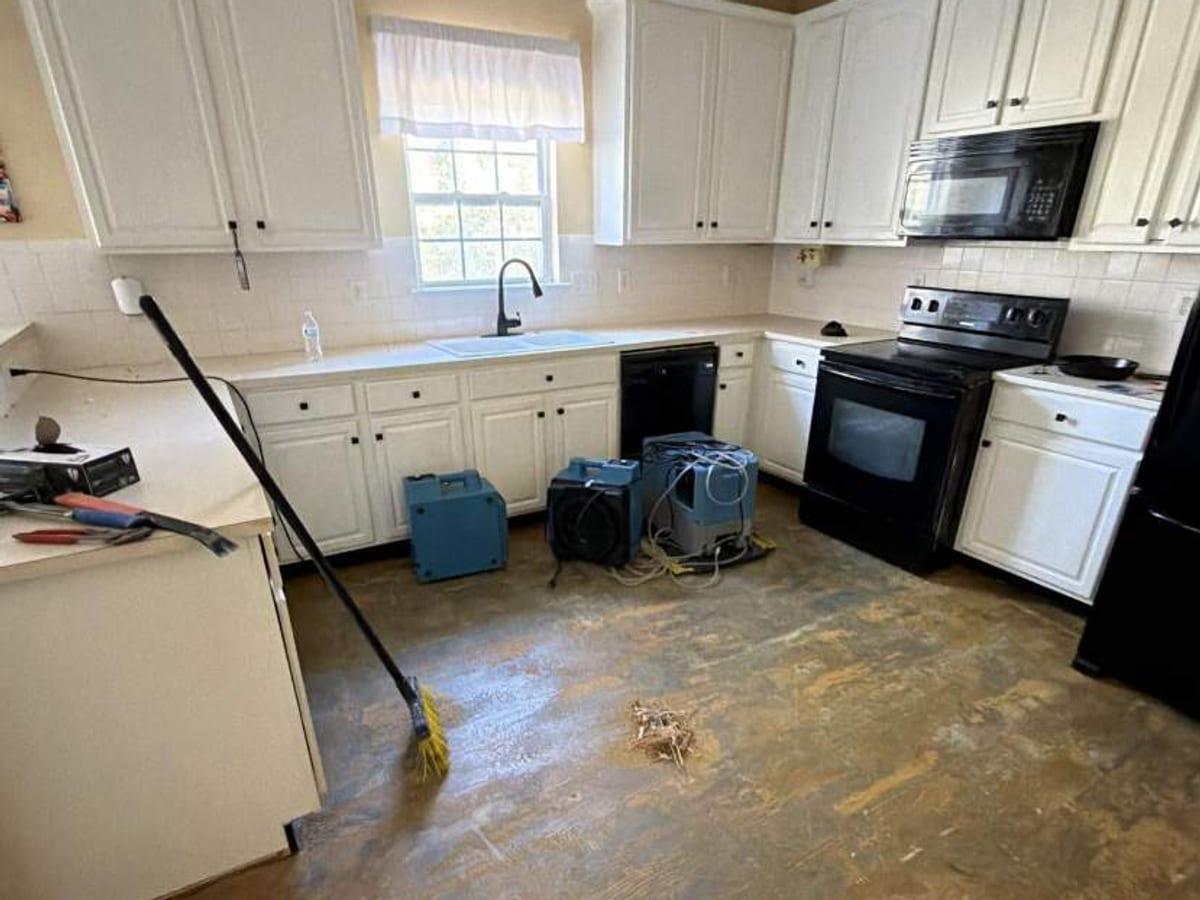
When water shows up beside an appliance, the first question is usually which part leaked: the machine, a supply or drain connection, or a pipe nearby. That question belongs to an appliance technician or a plumber. Ours is different: where did the water go, and what is it sitting in? Appliance leak cleanup is the work of finding the wet floor layers, cabinet bases and wall edges around the leak and drying them, and it starts the same way whatever the appliance.
We start where the water started and work outward. We look at the floor around the appliance, the cabinets beside it, the wall behind it and the room below if there is one, and we write down what the meter reads at each spot. That map shows how far the water went, and it is what the drying is measured against.
Appliance leaks are one of the everyday ways water gets into Charlotte-area homes, and they are easy to underestimate because the puddle looks small. Many homes here are built over crawl spaces, so water that gets past a kitchen or bathroom floor can pass through into the space under the house, where no one sees it. Crawl spaces are where we started, so we think about what is under the floor. Humid summers slow drying down, and wet floor layers can stay damp longer than the surface suggests.
Call us at (980) 501-1879. We answer 24/7 and send a crew as soon as we can.
Identify the Appliance and Water Path
Start with when and where the puddle appears. Water under or behind a refrigerator, or only when the dispenser or ice maker is running, points in a different direction than water at the front of a dishwasher during a cycle, or water that spills over the rim of a bathtub. Where the puddle first appears is the most useful clue, and the technician or plumber will want to know it too. We don't diagnose a machine from a puddle, and we don't ask you to. If you can, note the time, the room, whether the appliance was running and whether the water looked clean or dirty. That helps the technician, and it helps us decide how to treat the materials the water touched.
Refrigerators, dishwashers and bathtub overflows are three common sources. Washing machines, ice makers and water heaters are other common sources of the same kind of damage. When one of those is the source, the wet floor, cabinets and walls are assessed and dried the same way, and an appliance technician or plumber deals with the equipment.
Address Active Water and Equipment Safety
If the leak is still going, stopping the water is the priority. Close the shutoff valve for the appliance if you can reach it without stepping into water, or stop the tap on a bathtub. Don't reach for wet electrical equipment, and don't try to move a connected machine across a wet floor. CDC disaster-cleanup guidance gives the same caution about electricity and standing water. Leave moving or disconnecting the machine to the technician or plumber who is fixing it.
An appliance technician or plumber finds and fixes the cause. We evaluate and dry the property the water reached. If a repair appointment is already booked, tell us when you call.
Assess Materials Around the Appliance
Water from an appliance rarely stays where it landed. It moves along floor seams, into cabinet bases, behind baseboards and along wall edges, and in a two-storey home it can reach the ceiling below. We check these places selectively with moisture meters and a thermal imaging camera, instead of tearing out everything or deciding a floor is fine because the surface looks dry.
EPA guidance on clean-water damage calls for checking that underflooring is dry, and that is the idea behind our checks: a small puddle can hide a wet layer beneath. If the readings show water in a floor or a wall, we dry it. If a material can't be dried, such as a swollen cabinet toe-kick or a soft section of flooring, we remove it so the layers behind it can dry. Checking for hidden moisture is the same work as a water damage inspection. Drying is structural drying: air movers and dehumidifiers set where the readings say, then checked again until the materials read dry. If there is standing water first, water extraction removes it before any of that starts.
If water reached a room below, we check its ceiling for ceiling water damage too, including the drywall and any insulation above it. Once everything is dry and documented, repairs can begin. We give you the drying records your adjuster needs, and we can also handle repairs such as drywall, flooring and cabinets. If you already have a contractor, we'll give them the drying records and work alongside them.
How Each Appliance Leak Differs
A refrigerator, a dishwasher and a bathtub overflow each put water in a different place, so what we check first depends on the appliance: the floor beneath and behind a refrigerator, the toe-kick and cabinet bases around a dishwasher, the floor edges and the ceiling below a tub. If your leak came from a washing machine, an ice maker or a water heater, the closest match is the appliance whose water path looks most like yours. The cleanup follows the materials the water reached, not the brand or the machine.
Refrigerator Leak Cleanup: Trace the Puddle and Check Behind the Unit
A puddle near a refrigerator can come from the household supply line, a drain pan, an internal drain, the dispenser or the ice maker, and the cause depends on the model and on when the puddle appears. It isn't always the ice maker, and you can't tell from the floor. Ask yourself whether the water is under the unit, behind it, inside the fresh-food compartment, or only there after the dispenser runs. Tell us what you see, and tell the appliance or plumbing professional who diagnoses the source. A refrigerator leak cleanup starts with the floor. The repair of the refrigerator or its water line belongs to the right technician or plumber.
A refrigerator can hide wet flooring beneath and behind its footprint. We look first at the floor around and beneath the unit, the cabinet ends beside it and the wall behind it, where the water line comes in. We check what we can reach along floor seams, baseboards and cabinet ends. If the unit has to be moved to see the floor under it, that should be done safely and with the power disconnected. Please don't pull a heavy, plugged-in refrigerator across a wet floor, and avoid touching wet electrical components. If the outlet is hard to reach, ask a qualified professional before you unplug anything, and follow your model's own safety instructions.
Water on a tile surface doesn't prove the subfloor is wet, and a dry surface doesn't prove it's dry. A kitchen floor that stayed wet under a refrigerator for days can hold water in the layers below, and in a home over a crawl space that water can drain through to the space beneath. We check with moisture meters, and if the readings show water in the subfloor, we dry it. Whether a floor can be dried or has to be taken up depends on the material and on how long it was wet.
Dishwasher Leak Cleanup: Water Beneath the Unit and Cabinet Bases
A puddle by a dishwasher can start at the front door, the supply connection, the drain line or the sink plumbing next to it. Where the water first appeared, and whether it was during filling, washing or draining, tells the technician or plumber where to look. We don't diagnose the dishwasher. We deal with where the water went.
A built-in dishwasher sits against cabinet bases, behind a kick panel, above the kitchen floor. Water that leaks from it can run beneath the unit, along the cabinet bases and into the toe-kick, the cabinet side panels and the floor below. The puddle you wipe up is rarely all of it. The cabinet under the sink beside a dishwasher often shares the same floor and the same water, so we check there too. We check these places with moisture meters when what you've seen suggests water went there. Please don't move or disconnect an energized dishwasher yourself.
What stays and what goes depends on the material, how long it was wet and how easy it is to reach. A toe-kick or a floor that reads dry after a short exposure may only need drying in place. A cabinet panel or a section of floor that has swollen or gone soft is removed during drying, so the layers behind it can dry. Once the area is dry and documented, we can replace the cabinets and flooring that came out, or work alongside your own contractor.
Bathtub Overflow Cleanup: Wet Floors and Rooms Below
A bathtub overflow and a leaking overflow drain are different problems. A tub that overflows spills water over the rim and across the bathroom floor. The overflow drain is a plumbing fitting in the tub assembly, and when it leaks it can wet concealed areas even though the tub never spilled. A plumber fixes the fixture and the source; we handle the water and the drying. Either one can leave wet flooring, wet walls and sometimes a stain on the ceiling below.
If the tub has just overflowed, stop the tap if it's safe to, watch for slippery floors and keep away from wet electrical fixtures. Note where the water went and photograph it. If there is a room below, look at its ceiling from a safe distance for stains or wet finishes, but don't open a damaged ceiling. Call us if the water may have gone into the floor.
We check around the tub surround, the seams, the places where flooring changes, the walls beside the tub and the baseboards. If the signs point to water going down, we check the ceiling below too. A stain on that ceiling is a reason to assess, not proof of how far the water went. Other signs worth telling us about are flooring near the tub that gives underfoot, loose tile, paint that has started to bubble on the wall beside the tub, and a stain that appears on the ceiling below days later.
Whether a wet floor has to come up depends on the flooring, the underlayment, how much water got in and what the readings find. We dry first where we can and remove only what can't be dried. We don't set a fixed drying time. Moisture that stays in a floor or a wall can create conditions for mold, which is why we check and dry. A wet surface isn't proof of mold. If you want a look, we offer a free mold inspection: we look for visible growth and check moisture.
Ask About Appliance Leak Cleanup in Charlotte & Concord, NC
If water is coming from an appliance, call (980) 501-1879. We answer 24/7 and send a crew as soon as we can. Tell us which appliance it is, when the water started to appear, which rooms or cabinets are wet and whether water is still coming in.
An appliance technician or plumber fixes the equipment; we handle the water and the drying. We give you a written scope after we inspect. An appliance leak follows the same water damage restoration process as any other water loss, from the first call to the drying records.