
Professional Mold Remediation in Charlotte & Concord, NC
If you've found mold in your home, what you can see is rarely the whole problem. Mold grows where something stayed wet: a slow leak, a damp crawl space, water that got in after a storm, humidity that never dried out. The growth on the wall is the visible sign. The moisture is the cause. Mold remediation deals with both.
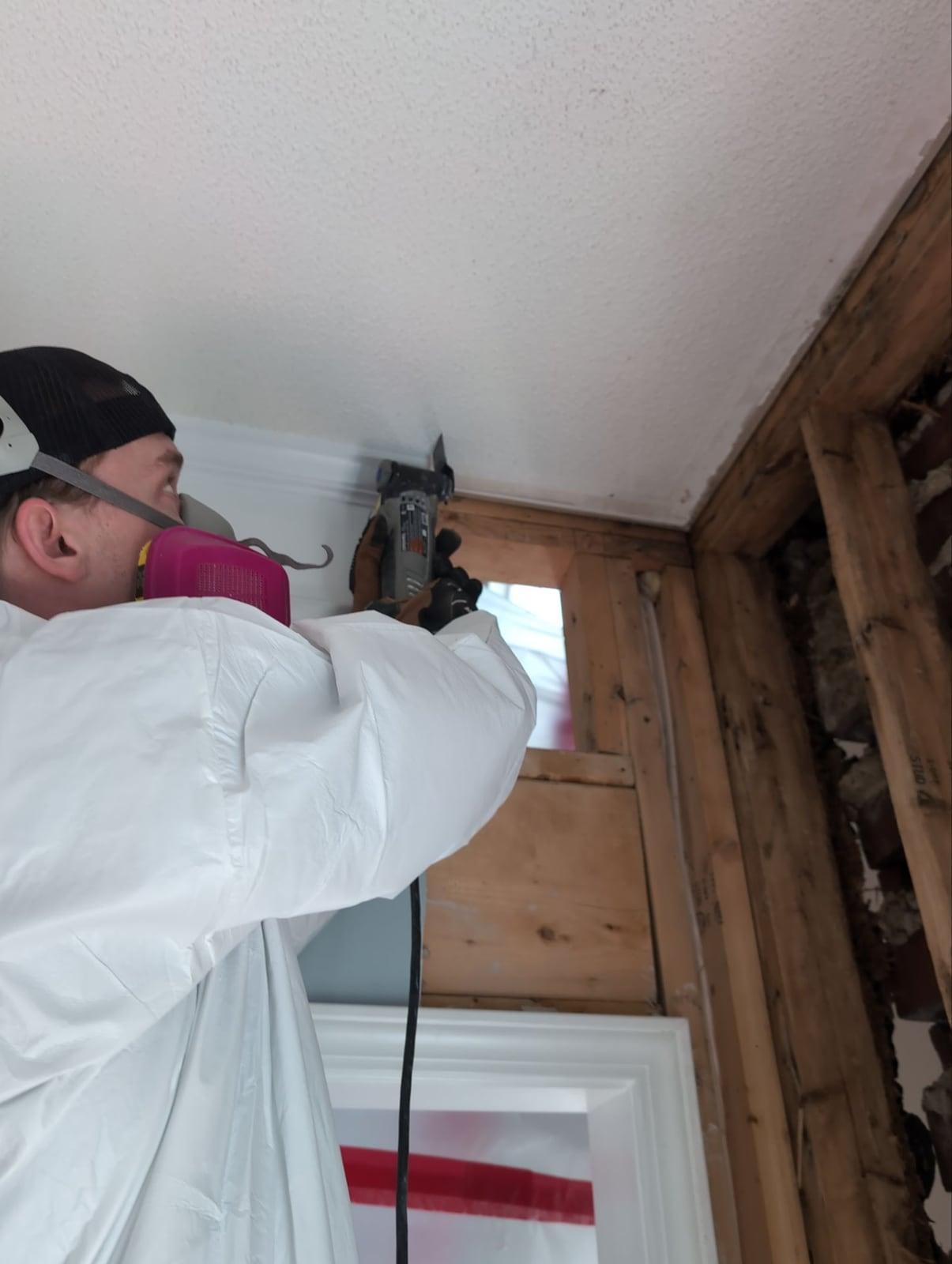
Our team handles mold remediation in Charlotte, Concord and the surrounding area from two local offices. We find the moisture source, contain the affected area, remove materials that can't be cleaned, clean what can be saved, and dry the structure. We document the work as we go.
We won't tell you a home will never have mold in it, because no one can. Spores are in ordinary air everywhere. What we do is remove visible growth from affected materials, deal with the moisture conditions behind it, and give you a clear record of what we did. If water damage came first, our water damage restoration team handles the water side, and the two jobs often overlap.
What Mold Remediation Includes
Remediation is more than cleaning a stain. Depending on what we find, the work can include:
- A check of visible growth, moisture patterns and the materials affected.
- Plastic containment, so dust and spores stay out of the rooms we aren't working in.
- HEPA air filtration running during the work to capture airborne particles.
- Removal of porous materials that can't be cleaned, such as drywall, carpet, insulation and ceiling tile.
- Cleaning of hard surfaces that can be saved.
- Drying the structure, and telling you what we found feeding the moisture.
- Final cleaning and documentation, so you have a record of what was found and what was done.
We do the removal and the drying. A plumber fixes the pipe; we handle the mold and the drying.
Mold Remediation vs. Mold Removal
You'll see both terms, sometimes as if they meant the same thing. Removal usually means cleaning or taking out the affected material. Remediation is the whole plan around it: finding the moisture, containing the work area, removing and cleaning, drying and documenting. Providers use the two words together, and at Phantom they are one service. Our mold removal work covers the visible-mold part of that plan. If you're comparing scopes from different companies, compare what each one covers, not what it's called.
When Mold Remediation Is Required
Not every small spot needs a full project, but some situations do: growth that covers more than a small area, mold that returns after cleaning, mold that followed a leak, a burst pipe or storm water, growth on porous materials such as drywall, carpet and insulation, and a musty smell with no visible source. A damp crawl space is a common one around here. If you can't tell whether you have a small spot or a bigger problem, a free mold inspection is the simplest way to find out. If anyone in the home has asthma, allergies or other health concerns, talk to a health professional before anyone does cleanup.
The Mold Remediation Process
Every home is different, but the sequence is the same:
- Initial inspection and safety review. We start with a free mold inspection. We look for visible growth and check moisture. Then we plan the work: what needs protecting, who needs to stay out of the area, and how we'll set up.
- Moisture source. We use moisture meters to find where materials are wet and trace the water back to its source.
- Containment. Plastic containment separates the work area from the rest of your home.
- Air filtration. HEPA air scrubbers run during the work to capture airborne particles.
- Material removal and cleaning. Porous materials with growth come out. Hard surfaces that can be saved are cleaned.
- Drying. Air movers and dehumidifiers dry the structure, and moisture readings tell us when it's dry.
- Final cleaning and documentation. We finish with a final cleaning and document the area with photos and moisture readings. That is a record of our own work, not independent clearance. If you or your insurance company want independent clearance testing, a third-party assessor can do it.
Once everything is dry and documented, repairs can begin. We give you the drying records your adjuster needs, and we can also handle repairs such as drywall, flooring and cabinets. If you already have a contractor, we'll give them the drying records and work alongside them.
Mold After Water Damage, Leaks, or Humidity Problems
Mold grows where moisture stays. In the Charlotte region the pattern is familiar: a crawl space that never quite dries out through a humid summer, red-clay soil that drains slowly and keeps the ground damp, a pipe that burst in a winter freeze and wasn't dried properly, an appliance leak behind a cabinet, or storm water after a summer thunderstorm. Roof leaks cause it too, and so does basement moisture if your home has a basement.
Drying and mold work belong together. Cleaning won't hold if the moisture keeps coming, and drying alone won't remove growth that has already started. If you've just had a leak or a flood, our water damage restoration team handles extraction and drying. Our structural drying covers walls, floors and framing, and we check each one with a moisture meter before we call it dry.
Safety, Containment, and Indoor Air Protection
Mold can affect indoor air quality, and the EPA and the CDC both publish homeowner guidance on cleanup. A few points matter most. Don't disturb suspected mold without protection. Scrubbing, sanding or pointing a fan at it can put spores into the air and spread them to clean areas. Keep the area closed and keep people and pets out. If anyone in the home has asthma, allergies, a chronic lung condition or a weakened immune system, talk to a health professional.
On our jobs, containment does the protecting. Plastic containment and HEPA air scrubbers keep the work area separate from the rest of your home. Porous materials such as drywall, carpet, insulation and ceiling tile often have to come out, because mold can grow into them and can't always be cleaned out. If you think mold has reached your heating and cooling system, don't run it until an HVAC professional has looked at it.
Mold Remediation Cost Factors
We don't publish a price list, because mold jobs vary too much for one number to be honest. What drives the cost: the size of the affected area, where it is and how easy it is to reach, the materials involved (porous materials usually come out, hard surfaces can often be cleaned), whether tear-out is needed, how long drying takes, and whether you or your insurance company want independent testing.
The mold inspection and our visual findings are free. Testing and surface samples are charged separately, and we give you the price before any sampling is done. After we inspect, we give you a written scope, so you can see what the work involves before you decide. Financing is available — ask us for details.
Insurance and Documentation for Mold Damage
Whether mold is covered depends on your policy and what caused it, and your insurance company makes that call. We can't tell you what your policy covers.
We work with all insurance companies. We document the damage with photos, moisture readings and drying records and share them with your adjuster. Your policy and your insurance company decide what's covered. For mold, that record covers the areas affected, the moisture readings, the materials we removed and the steps we completed.
Related Mold Services
Mold looks different depending on where it is and what caused it, so the work changes with the situation.
Mold Removal
Visible mold on walls, ceilings, trim, wood and drywall is the call we get most. In our mold removal work, we clean what can be saved, take out what can't, and tell you when a small spot is something a homeowner can handle.
Mold Inspection
Not sure what you're dealing with? Start with a free mold inspection. We look for visible growth and check moisture. The same team inspects and removes mold. If you or your insurance company want independent testing, a third-party assessor can do it. Mold testing helps when you need to know what's in the air or on a surface, not just what you can see, and it isn't always necessary.
Black Mold Removal
Dark growth worries people most. Color alone doesn't tell you what kind of mold it is, and only lab testing identifies the type. If you find it, leave it alone and call us. Our black mold removal deals with the visible growth and the moisture feeding it, the same as for any other mold.
Attic Mold Removal
Mold on attic sheathing and insulation usually traces back to a roof leak, humid air or a bathroom fan venting into the attic. Our attic mold removal cleans the sheathing where it can be saved and takes out insulation that can't be cleaned.
Crawl Space Mold Removal
Many homes here sit on crawl spaces, and a damp one is where a lot of our mold calls start. Our crawl space mold removal cleans what can be saved on the joists and subfloor, takes out insulation that is damp or has growth on it, and dries the space.
Schedule Mold Remediation in Charlotte & Concord, NC
If you see mold, smell a musty odor that won't go away, or had water damage that didn't dry out quickly, we can come and look. Book your free mold inspection. We'll check the visible growth and the moisture, explain what we find, and tell you the next step for your home. If work is needed, we give you a written scope after we inspect.
Call (980) 501-1879. We answer 24/7.