
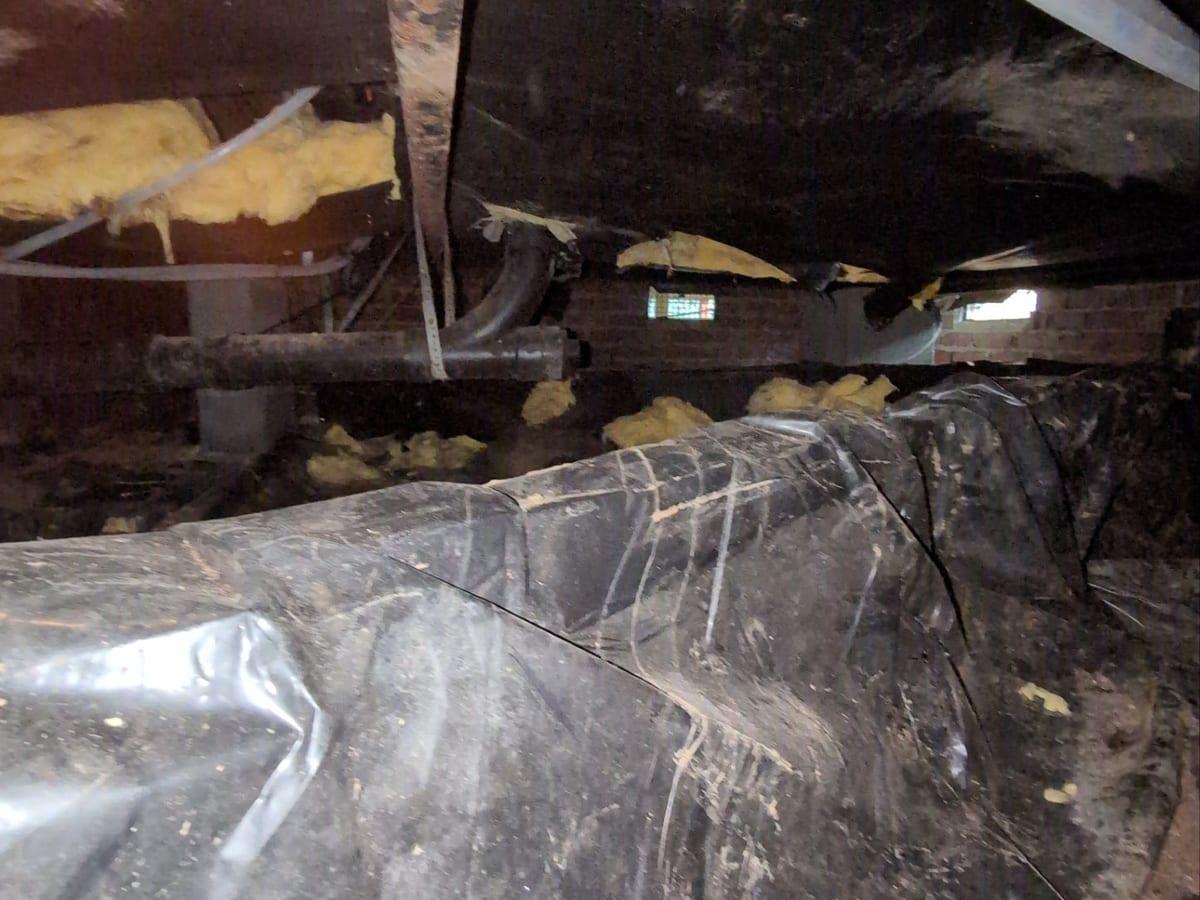
Crawl Space Mold Removal for Damp, Musty, or Water-Damaged Crawl Spaces in Charlotte & Concord, NC
Crawl spaces are where we started. We're a local company based in Concord and Charlotte, and we've been working in the Charlotte region since 2022. Working under houses, we kept seeing the same thing: moisture in the crawl space turning into mold. So we trained in mold remediation. And mold kept pointing back to water, which is how our water damage restoration work grew out of the same story. It's also why we look at the water as well as the mold on every crawl space job.
If you've noticed a musty smell upstairs, damp or sagging insulation under the floor, or growth on the joists, we can look at it. Our mold removal team removes mold from crawl space framing, subfloor and insulation, cleans what can be cleaned, dries the space, and tells you what we find feeding the moisture.
Many homes in the Charlotte region sit on crawl spaces, and the climate and soil here make damp ones common: humid summers, red-clay soil that drains slowly, and summer thunderstorms. A damp crawl space isn't a sign you've neglected your house. It's what happens when ground moisture and humid air meet cool wood.
Why Mold Grows in Crawl Spaces
Mold needs moisture, and a crawl space has several ways to collect it. Damp soil gives off moisture all year, and exposed soil gives off more. Humid summer air drifts in and settles on cool pipes, ducts and wood. A plumbing leak can drip for months where nobody sees it. Water can seep in at the foundation wall or collect after a hard rain, and a flood leaves wet insulation and standing water behind. Condensation on air handling equipment adds to the load. Wet insulation then holds the moisture against the floor above, which is often where growth starts.
We sort these sources apart because they have different fixes, and the fix usually isn't ours. A pipe leak is a plumber's job. Ground moisture and water entry depend on the house and the soil, and no single measure fixes every crawl space. What we do is find which source we're looking at and tell you, so the mold cleanup isn't wasted. If your crawl space has flooded, our crawl space flooding work comes first, because the water has to come out before anything else.
Signs of Crawl Space Mold
The usual signs are a musty smell in the rooms upstairs, especially in humid months; visible growth or dark staining on joists and subfloor; damp, sagging or discolored insulation; condensation on pipes or ducts; a damp, heavy feel in the air when you open the access hatch; a smell that might be pests rather than mold; and a home inspection report that flagged moisture under the house.
A musty smell upstairs doesn't mean your living space is contaminated. It means something under the house is damp and worth checking. Crawl spaces are tight, with pipes, wiring and sometimes standing water, so you don't have to go in yourself. Tell us what you've noticed and we'll take it from there.
While you wait for an inspection, keep the access hatch closed and don't run a fan to push crawl space air around. If you can see a leaking pipe, shut off the water to it if you can do that safely. If there is standing water down there, stay out of the crawl space and call us.
Crawl Space Mold Remediation Process
Every crawl space is different. Some are tall enough to stand in, and many aren't. The steps are the same.
Access and Source Assessment
We start with how to get in and out safely, whether there is standing water, where the plumbing and electrical run, and where the moisture is coming from. We check moisture on the joists, subfloor and insulation to see how far it goes. We take photos as we go, so you can see what we saw. Before any work starts, we tell you what we found and what we think is feeding it.
Wood and Insulation Decisions
Joists, subfloor and insulation are looked at separately. Sound wood with surface growth can sometimes be cleaned and dried. Insulation that is damp or has growth on it comes out, because it holds moisture and can't be cleaned reliably. Soft or damaged wood is a structural question for a qualified specialist. A mold inspection is not a structural opinion, and we won't tell you a joist is sound. Once everything is dry and documented, repairs can begin. We give you the drying records your adjuster needs, and we can also handle repairs such as drywall, flooring and cabinets. If you already have a contractor, we'll give them the drying records and work alongside them.
Drying and Moisture Handoff
After the mold work, we dry the space. Air movers and dehumidifiers run until moisture readings show the wood is dry, and we record the readings and take photos before and after, so you have a record of what was affected and what we did. Then we tell you what we saw feeding the moisture. A plumber fixes a leaking pipe; we handle the mold and the drying. It's the same structural drying we use on framing and floors after any water event.
Preventing Crawl Space Mold From Returning
Mold comes back when the moisture does, so the honest answer to prevention starts with the source. If a pipe is leaking, the pipe has to be fixed. If the ground is feeding the space, or water collects there after storms, that needs attention too. Cleaning and drying clear out what is already there. They don't change what is feeding the space.
What we do is tell you plainly what we found: where the moisture was coming from, how wet the materials were, and what we saw before and after, with photos and moisture readings. Whether your crawl space needs anything more than cleanup and drying, such as better drainage around the house, ground-moisture control or humidity management, depends on the house, the soil and the season, and it's a question for a qualified building professional. A moisture-control measure on its own doesn't clean mold that is already there, and mold removal on its own doesn't stop moisture from coming back. You need both halves addressed. Simple housekeeping helps too: keep gutters and downspouts clear and pointing away from the house, and fix any outdoor spigot that drips near the foundation.
Request Crawl Space Mold Help in Charlotte & Concord, NC
If you smell mustiness upstairs, see growth under the house, or have damp insulation, get it looked at before the damp spreads to more of the framing. Book your free mold inspection and tell us what you've seen. We look for visible growth and check moisture, then explain what we find and what to do next. Tell us when you book that the concern is in the crawl space, and we'll talk through what we can look at.
Call (980) 501-1879. We answer 24/7.