
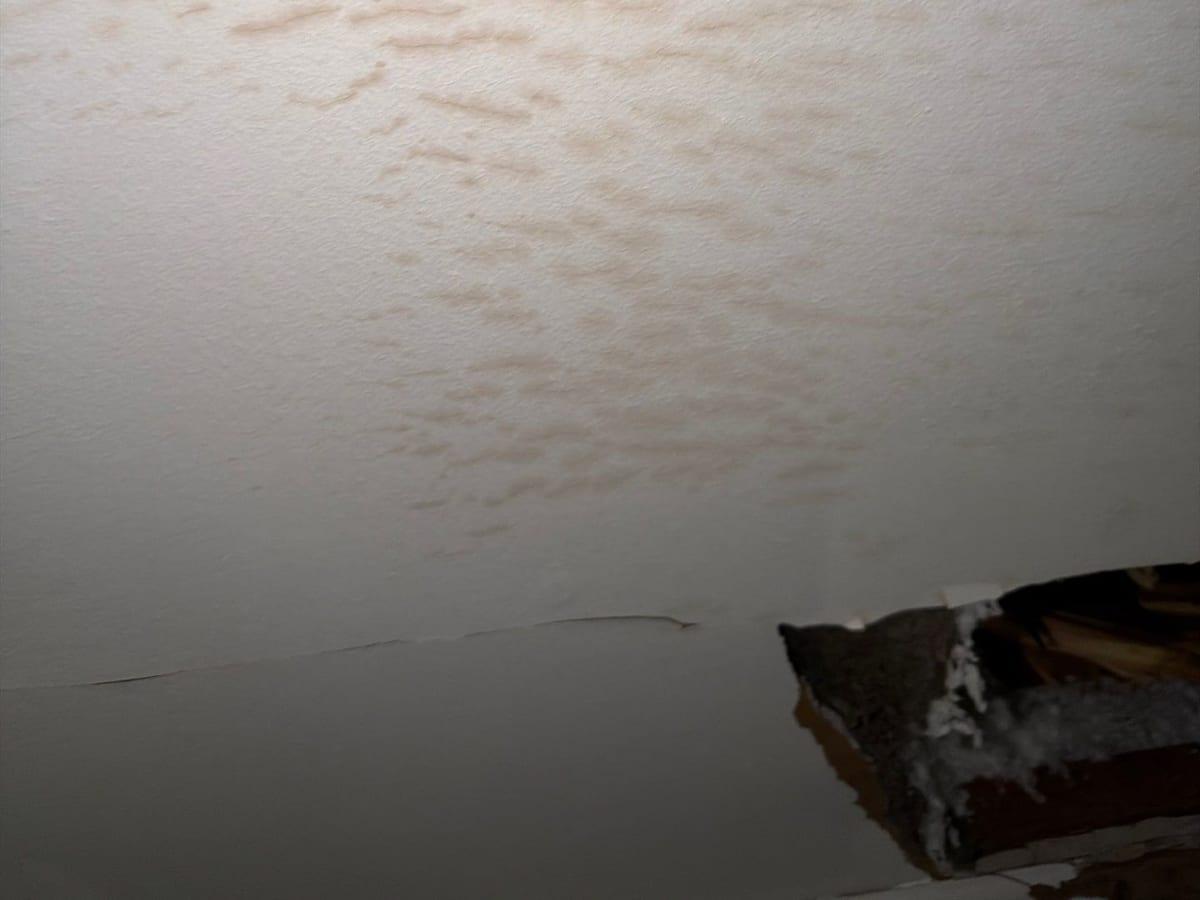
Ceiling Water Damage in Charlotte & Concord, NC: Check the Overhead Cavity First
A brown stain, a slow drip, a bulge or a sag in the ceiling means water is sitting in or above it right now, and what you can see from the room is usually the smaller part of it. If the ceiling is sagging or dripping, stay out from under it and tell us exactly what you see. Don't push on it, don't poke it and don't try to open it yourself. The space above a ceiling holds drywall, insulation, framing and sometimes wiring, and all of it can be wet before the paint shows anything.
The water often did not come from straight above the stain. It can run along joists, pipes and the underside of the roof deck before it finds a way down, so the wet spot in your room can sit several feet from where the water got in. In the Charlotte region, ceiling damage comes from wind-driven rain during summer thunderstorms and tropical-storm remnants, from an upstairs bathroom or appliance, from a supply line that froze and split in winter, and from air conditioner condensation in humid summers.
When you call us at (980) 501-1879, we answer 24/7 and send a crew as soon as we can. We'll ask where the stain or drip is, whether the ceiling is sagging, whether water is still coming through, what is in the room above, and whether any lights or outlets near the area are wet. EPA flood-cleanup guidance says to throw away what you can't clean and dry and to dry the rest completely. Sorting what can be dried from what can't is where our assessment starts.
Keep Clear of Sagging or Wet Electrical Areas
A saturated ceiling can fail, and water pooled above it adds weight. If you see a sag, a bulge or a ceiling that has gone soft, keep people and pets out from under it and close the door to the room if you can. Don't stand beneath it to take photographs, and don't cut or poke into it to let the water out. That can bring the wet material and the water down on you at once.
Water and electricity are the second concern. Ceiling lights, fans and smoke detectors all have wiring above the drywall, and water can reach it. Don't use fixtures, ceiling fans or outlets that are wet or close to the wet area, and don't touch them. Call an electrician if you think wiring is wet. CDC guidance on re-entering flooded homes gives the same caution about electrical equipment and water. We don't do electrical work, and we can't tell you from a phone call that a ceiling is structurally safe, so we treat every sagging ceiling as something to stay away from.
Find the Source Above
A stain records water that was there. It doesn't tell you whether water is still getting in. The possible sources are roof entry, upstairs plumbing such as a supply line, a drain or a bathtub or appliance overflow, and condensation from an air conditioner's drain line or pan. We treat each one as a possibility until the readings point somewhere.
A roofer fixes the roof and a plumber fixes the pipe; we handle the water and the drying. Drying a ceiling that is still being rained on or dripped on only means doing the job twice, so tell us early whether the source has been stopped. If you don't know, tell us that. It changes the plan.
During an inspection, we use moisture meters and a thermal imaging camera to see where the wet material is, and that often helps point toward where the water came from. We don't repair roofs or plumbing, and we don't claim to find every leak.
Check Ceiling Layers and Adjoining Rooms
A dry-looking stain doesn't prove the cavity is dry. We check the accessible layers one at a time: the ceiling drywall, any insulation above it, the trim, the room above, and the rooms and walls beside the damage. Moisture meters tell us how wet each layer is, and a thermal imaging camera shows cooler, wetter areas the eye can't see. We note the edges of the wet area and document them, so you and your adjuster can see how far the water traveled.
This is the same work as a water damage inspection: mapping where moisture is hiding. In a ceiling it matters because insulation above a wet ceiling can hold water against the drywall long after the surface looks fine, and water that ran along framing can show up in a different room altogether. If the water came from upstairs, we check the floor and walls up there too.
We can't promise that every cavity can be checked without opening it, and we don't open more than the readings call for. Where we do open a ceiling, we use plastic containment and HEPA air scrubbers to keep dust in the work area.
Decide Between Drying and Selective Removal
Material condition, contamination and access decide what stays. Ceiling drywall that is only damp and still firm can sometimes be dried in place with air movers and dehumidifiers while we watch the readings. Drywall that is sagging, bubbling, stained through or soft usually comes out, because it won't hold its shape once it has been that wet. Wet insulation above it usually comes out too. Paint and texture can hide how wet the board underneath is, so we go by the readings and by how the drywall feels, not by how the surface looks. We remove wet material in sections and leave dry material alone.
If the water came from a sewage backup or from floodwater, the answer changes. Porous drywall and insulation that contaminated water has soaked may have to be removed and thrown away rather than dried, following the same CDC and EPA guidance that applies to any contaminated water.
When drying runs longer than a single visit, structural drying continues with the equipment in place and readings at each return. If we find visible mold growth while opening a ceiling, we'll tell you. We offer a free mold inspection, where we look for visible growth and check moisture.
What Happens When Drying Is Done
Once the source is stopped and the readings show the wet materials are dry, the ceiling stops being a moisture problem, and the next step is repair, which comes after the drying. A coat of paint over a stain doesn't dry what's trapped above it, and a stain-blocking primer only hides it, so don't let anyone paint before the readings are finished.
Once everything is dry and documented, repairs can begin. We give you the drying records your adjuster needs, and we can also handle repairs such as drywall, flooring and cabinets. If you already have a contractor, we'll give them the drying records and work alongside them.
We work with all insurance companies. We document the damage with photos, moisture readings and drying records and share them with your adjuster. Your policy and your insurance company decide what's covered.
Request Ceiling Water Damage Help in Charlotte & Concord, NC
If a ceiling is dripping, sagging or stained in Charlotte, Concord or the surrounding area, call (980) 501-1879. We answer 24/7 and send a crew as soon as we can. Tell us where the stain or drip is, whether the ceiling is sagging, whether water is still coming through, what is in the room above, and whether you're worried about wet lights or wiring.
We give you a written scope after we inspect, and we won't promise that a ceiling is structurally sound or that it can be saved before we've looked. A ceiling leak follows the same water damage restoration process as any other water loss, from the first call to the drying records.