
Storm Damage Repair After Stabilization in Charlotte & Concord, NC
Summer thunderstorms and the remnants of tropical storms can push a lot of water into a house in a short time. It comes through a broken window, a damaged door, a roof leak or a gap the wind opened, and it soaks ceilings, walls, insulation and floors on its way down. Phantom Restoration provides storm damage repair in Charlotte & Concord, NC, for the inside of the home. Once the water is out and the structure is dry, we repair drywall, ceilings, insulation, flooring, cabinets and trim, and we paint the repaired areas.
The roof, siding and windows themselves are for a roofer or the right contractor. Call us for the water that came in and the repairs inside. If the storm left an opening that's still letting rain in, it has to be closed first, and if water is still sitting in the house, the drying comes before any repair.
Call (980) 501-1879. We answer 24/7 and send a crew as soon as we can. If we handle the drying, one team takes you from the storm through the repairs. If you already have a contractor, we'll give them the drying records and work alongside them.
Types of Storm Damage That May Need Repair
Storm damage has two parts: the outside of the house, where the weather got in, and the inside, where the water went. Both need repair, usually by different trades.
Inside the house, the damage we repair:
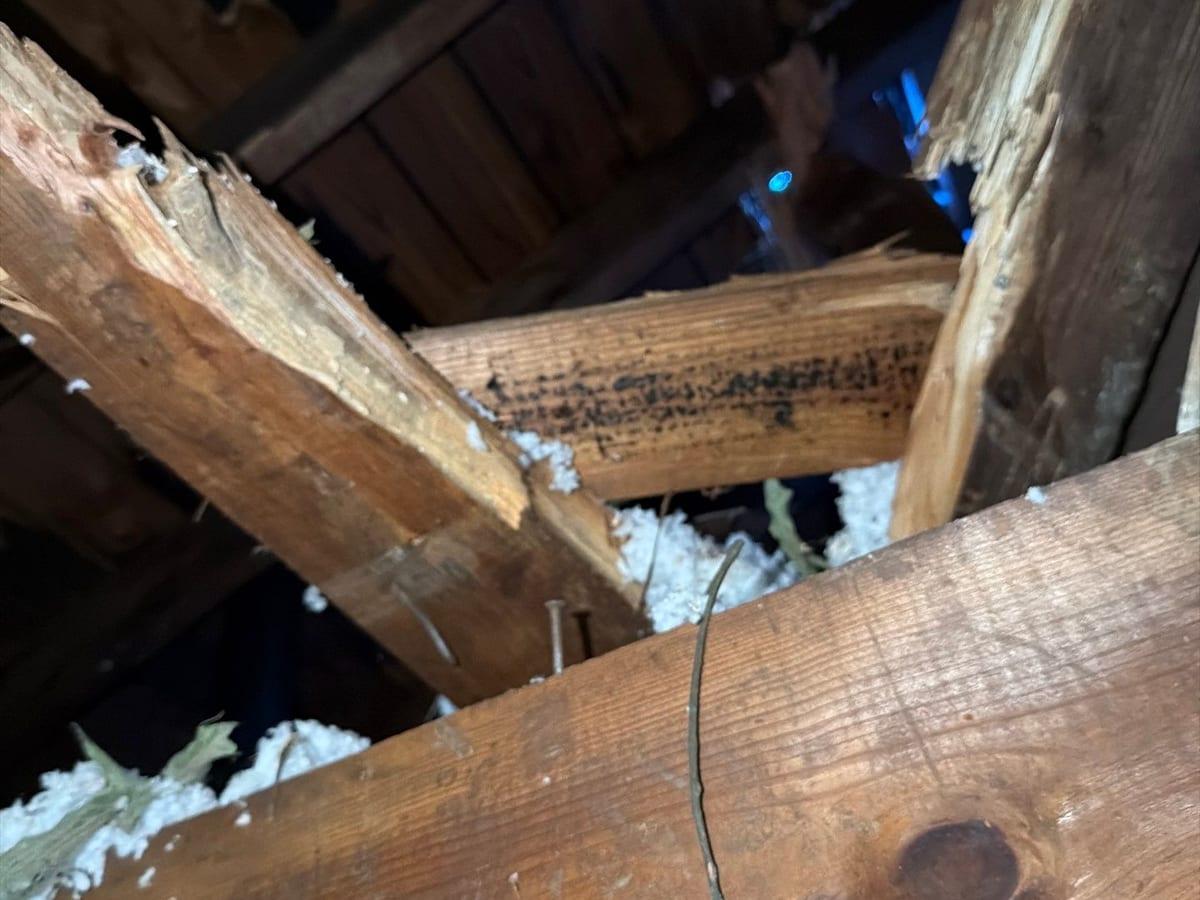
- Ceilings that are stained, sagging or soaked from water coming through the roof or the attic.
- Drywall that got wet from rain driven through a broken window, a door or a gap in the wall.
- Insulation in walls and attics that soaked up water and had to come out.
- Flooring that got wet, cupped or came apart, and the cabinets and trim along the floor that swelled.
- Paint on walls and ceilings where sections were replaced.
Outside the house, the damage other trades repair:
- Roof damage, such as missing shingles or an opening left by a fallen limb, goes to a roofer.
- Broken windows, damaged doors and siding go to the right contractor, once they've been closed temporarily.
- A tree or limb on the house goes to a tree service before anyone works under it.
Our part starts where the water got in. A roof leak can show up as a stain two rooms away, and rain pushed through a wall can soak the insulation without marking the drywall, so we check with moisture meters and thermal imaging, not just by looking. Wind-driven rain is one of the most common ways this happens, and our wind damage restoration work starts by finding every place it got in.
Stabilization Before Permanent Repairs
Permanent repairs only hold if the house is protected and dry first. Stabilization is the first stage of storm damage restoration: it stops more damage while the repairs are planned.
- Close the openings. A broken window, a damaged door or a hole in a wall keeps letting rain in. Our board-up services close those openings temporarily. Board-up isn't a repair and doesn't make the building weatherproof, but it keeps the next rain out. If the roof itself is open, call a roofer.
- Get the water out. Standing water is extracted, and air movers and dehumidifiers dry the structure until moisture readings say it's dry. Our water damage restoration work covers that drying, including crawl spaces, where storm water can sit under the house without anyone noticing.
- Stay safe around debris. Keep away from downed power lines, fallen trees and anything that looks unstable, and follow instructions from your utility and local authorities. The CDC's guidance on returning home after a disaster covers the basics. If the area may be unsafe, call us before you move debris or pull out wet materials.
Closing a wall over wet insulation, or laying flooring on a damp subfloor, traps the water inside, and in a humid Carolina summer that can turn into mold. That's why the repairs wait for the readings, not the calendar. The EPA's flood cleanup guidance makes the same point: dry everything out before repairs begin.
The Storm Damage Repair Process
Every storm job is different, but the work follows the same order.
Inspection and documentation
We look at the damage from safe places first: the openings, then the ceilings, walls and floors the water reached. We photograph what we find and take moisture readings to see how far the water traveled. We don't make structural or electrical safety decisions, and we don't go onto a damaged roof. If something looks unsafe, we tell you who to call.
Temporary protection
If an opening is still letting rain in, it's closed with temporary board-up before anything else. That's a separate stage from the permanent repair, and it protects the inside of the house while the roofer or the right contractor schedules their work.
Water mitigation if needed
If water got in, it comes out before any repair. We extract it, then dry the structure with air movers and dehumidifiers and check it with moisture meters until the framing, subfloor and wall cavities read dry. We don't close a wall or lay a floor until they do.
Cleanup and removal
Materials too wet or damaged to dry in place come out: soaked insulation, drywall below the water line, ruined flooring and swollen cabinet bases. We also clear the glass, leaves and debris that blew in through a broken opening. Fallen trees and debris outside the house are for a tree service.
Repair scope
Then we write the repair scope: which rooms, which ceilings, walls, floors, cabinets and trim, what's replaced and what isn't included. Roof, siding and window work is listed as someone else's, so it's clear who does what. You get the scope in writing after we inspect, and you can share it with your adjuster. If the rooms are full, our packout services move belongings out first and bring them back afterward.
Then we do the repairs: insulation into the open walls and ceilings, new drywall hung and finished, flooring laid, cabinets and trim installed, and the repaired areas primed and painted. For walls and ceilings, our drywall water damage repair follows the same checks before anything is closed. These are the same reconstruction services we provide after water, fire and mold damage.
Final review
We walk the finished rooms with you, check the work against the written scope and note anything still outstanding, including outside work another trade still has to finish.
Storm Repair and Insurance Documentation
We work with all insurance companies. We document the damage with photos, moisture readings and drying records and share them with your adjuster. Your policy and your insurance company decide what's covered.
For the repairs, you also get a written scope after we inspect, listing the rooms, the materials and what's being replaced. Before we close a wall, we photograph what's inside it. If your adjuster wants to see the damage before materials come out, or before a wall is closed, tell us and we'll plan around it. Keep your own photos from the day of the storm, too. We can't tell you what your policy covers or promise how a claim will go. Your insurance company has to answer that.
Storm Repair Considerations for Business Properties
Storm water gets into offices, shops and rental buildings the same way it gets into homes, and the repairs inside are the same work. What changes is the planning.
At a business, people may still need to use the building, tenants need to know what's happening, and the owner or property manager needs a clear record. We'll plan the work around your operations with you and tell you honestly what can stay open. We record the damage and the work area by area, so whoever reports to the owner or the tenants knows which spaces are dry, which are being repaired and which are finished. Our commercial storm damage restoration work covers the board-up, extraction and drying side in more detail.
Start Storm Damage Repairs in Charlotte & Concord, NC
If a storm has damaged the inside of your home, call Phantom Restoration at (980) 501-1879. Tell us where the water came in, whether that opening has been closed or repaired, and what's wet. If the water is still there, we start with the drying. If it's already dry, we'll check the readings, look at what needs repair and give you a written scope.
We answer 24/7 and send a crew as soon as we can. We're a local company based in Concord, with a second office in Charlotte, and we've served the Charlotte region since 2022. Financing is available — ask us for details.