
Commercial Storm Damage Restoration for Damaged Facilities in Charlotte & Concord, NC
Summer thunderstorms and the remnants of tropical storms can put a lot of wind and water on a commercial building in a short time. Wind breaks windows and doors, debris punches holes in walls, and rain pushed sideways gets into ceilings, wall cavities, stock and equipment. Phantom Restoration provides commercial storm damage restoration in Charlotte & Concord, NC, and across the Charlotte region. We extract storm water, remove what can't be dried, dry the structure and document the damage.
If you own or manage any kind of commercial property, from an office, shop or restaurant to an apartment building, church or warehouse, call (980) 501-1879. We answer 24/7 and send a crew as soon as we can. Tell us what's broken, where water is coming in, which areas are affected, whether anyone is in the building and how the crew can get in.
Stay away from downed power lines and anything that looks unstable, and follow instructions from local authorities and your utility. If it's safe, take photos of the damage before anything is moved.
Identify Hazards and Damaged Openings
Before anyone works on a storm-damaged building, someone has to decide what's unsafe. Downed power lines, fallen trees and limbs, loose glass, damaged walls and unstable parts of the building come first, and those calls belong to the utility, the local authorities and the right specialists. The CDC's guidance on returning after a disaster covers the basics. We don't make structural or electrical safety decisions, and tree removal is a job for a tree service.
Once the area is safe, we note where water got in: broken windows and glass, damaged doors, holes in walls, and any place where water has found a way in from outside. Each one shows us where to start looking for water inside.
Start With the Water That Got In
Broken windows, doors and wall openings need to be closed so more rain and unwanted visitors stay out. You may need a glazier or a contractor to secure them. If openings are still open when you call, tell us, because rain that keeps coming in changes the drying plan.
We don't do roof work. If wind has opened the roof, a roofer needs to look at it. Our part starts with the water that got in: we photograph the damage before anything is moved, extract standing water, remove soaked materials that can't be dried and set up drying.
Trace Water Entry Into Work and Storage Areas
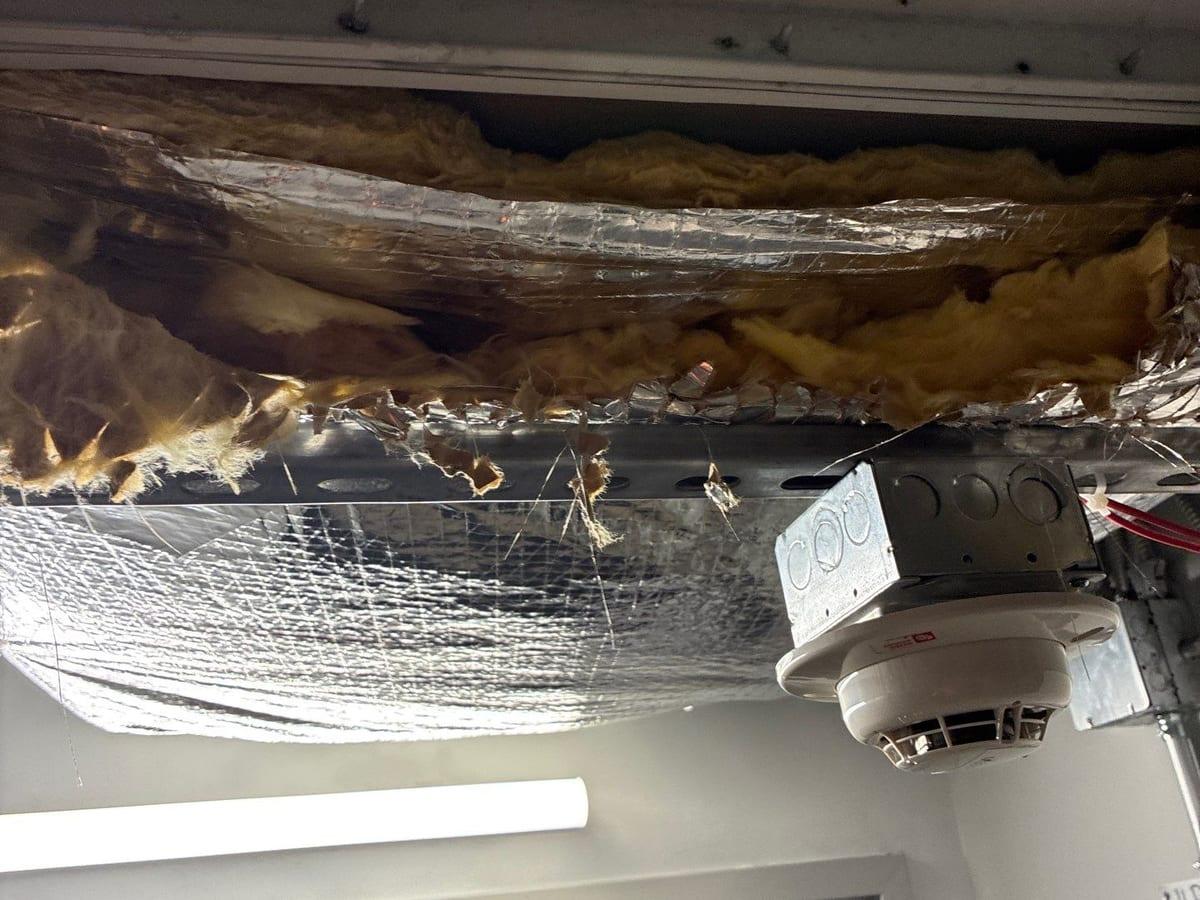
Storm water doesn't stay where it came in. It runs down inside walls, soaks ceiling tiles and insulation, spreads under flooring and reaches stock and equipment nowhere near the broken window. Sometimes it shows up days later, with no obvious entry point.
We follow it from each entry point. We use moisture meters and thermal imaging cameras to check ceilings, wall cavities and floors, and we record which rooms, storage areas and equipment are affected. Then we extract standing water and dry the structure with air movers and dehumidifiers until the readings say it's dry. Closing the opening doesn't mean the inside is dry; only the readings tell us that.
Rain that came through a broken window isn't automatically contaminated. Floodwater that rose from outside is treated as contaminated, and so is water that ran through dirty materials on the way in, so the handling changes. We decide that from the source and what we find on site. Our commercial water damage restoration page covers how we dry an occupied building.
If stock or equipment got wet, photograph it where it is before anything is moved. Decisions about what to keep are yours and your adjuster's.
Document the Damage and Plan the Next Steps
After a storm, a building is often partly usable and partly not. We record the damage area by area, so you can see which spaces are dry and which are still being worked on. We can work whenever you allow, including after hours. We'll tell you honestly what can stay open. Who uses which parts of the building is your decision and, where it applies, the local authorities'.
We work with all insurance companies. We document the damage with photos, moisture readings and drying records and share them with your adjuster. Your policy and your insurance company decide what's covered.
Roof, window and door replacement goes to the right trades. Once the property is dry, we also handle repairs after mitigation, such as drywall, flooring and cabinets. Our storm damage restoration page covers storm water in homes and businesses in more detail.
Discuss Commercial Storm Damage Restoration in Charlotte & Concord, NC
If a storm has damaged a building you own or manage, call Phantom Restoration at (980) 501-1879. We answer 24/7 and send a crew as soon as we can. Tell us the address, what's broken, where the water came in, which areas are affected and how the crew can get in.
We'll extract the water, set up drying, document the work and give you a written scope after we inspect. We're a local company with offices in Concord and Charlotte, in business since 2022. Financing is available — ask us for details. For water, fire and mold damage, see our commercial restoration services.