
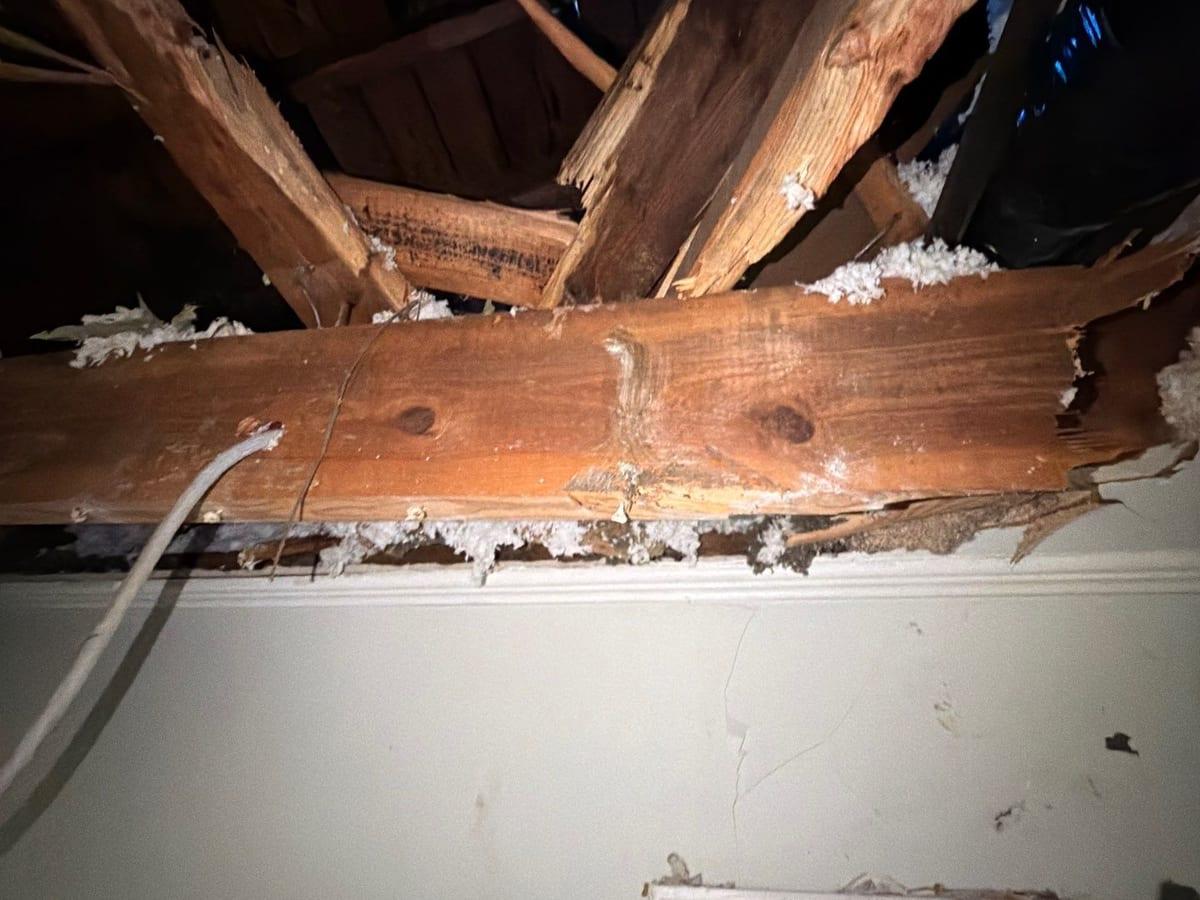
Storm Damage Restoration After Wind-Driven Rain and Flooding in Charlotte & Concord, NC
Storm damage restoration in Charlotte & Concord, NC starts with understanding where the water came from and how far it traveled. Summer thunderstorms, the remnants of tropical storms and heavy rain can push water through broken windows and doors, around failed seals, through a roof leak, or up from the ground into a crawl space or basement. Phantom Restoration helps with what the water does once it's inside: we secure openings with board-up, extract standing water, dry the structure and document the damage.
Red-clay soil drains slowly, so after a hard rain, water can sit against a foundation and find its way in. Many homes in the Charlotte area sit over crawl spaces, where water can sit unseen, and if your home has a basement, water can collect there too. Call (980) 501-1879. We answer 24/7 and send a crew as soon as we can. We serve homes and businesses across the Charlotte region from our offices in Concord and Charlotte.
Assessing Storm Damage and Temporary Property Protection
Before anyone moves debris or pulls out wet materials, make sure the area is safe. Stay clear of downed power lines and anything that looks unstable, and follow instructions from local authorities and your utility. The CDC has guidance on returning home after a disaster. If the area may be unsafe, call us before you move debris or remove wet materials. The first things we look at are openings that need closing and water that needs to come out.
Emergency Board-Up for Broken Windows, Doors, and Openings
If wind or storm debris has broken a window or a door, or a tree or limb has opened a wall, board-up closes the opening temporarily so more rain doesn't get in while the property is assessed. It's temporary protection, not a repair, and it doesn't make the building weatherproof. Our board up services start with a look at the opening and the material around it, and we photograph what we secure.
Water Intrusion and Immediate Moisture Control
Water that gets into a house keeps moving. It runs down walls, soaks insulation, pools under flooring and drips through the ceiling below the leak. The sooner standing water comes out and drying starts, the less of the structure is affected. We extract standing water, set air movers and dehumidifiers, and use moisture meters and thermal imaging to find where the water went, including places that look dry. Our water damage restoration work follows the water through the whole structure until the readings say it's dry.
Types of Storm Water Damage We Handle
Storm water gets into a property in more than one way. These are the two we see most.
Wind-Driven Rain and Exterior Openings
Rain that falls straight down mostly runs off a house the way it's designed to. Rain pushed sideways by strong wind is different. It can get in through broken glass, a damaged door, a failed window seal or a roof leak, and into walls and ceilings that never normally get wet. Sometimes the water shows up well after the storm, with no obvious entry point. We close broken openings with board-up, trace where the water traveled, extract it and dry the affected materials. Repairing the roof, siding or windows themselves is a job for a repair contractor.
Heavy Rain, Flooding, and Interior Water Damage
A heavy downpour can overwhelm the drainage around a home, and slow-draining clay soil makes it worse. Water can come in under doors, through basement walls and floors if there's a basement, or into a crawl space, where it can sit under the house without anyone noticing. The EPA has guidance on flood cleanup and indoor air, and floodwater is treated as contaminated. When standing water covers a wide area, our flood damage restoration covers the extraction and drying across every affected room. We do the same for water under the house in crawl space flooding jobs, and for water below ground level in basement flooding jobs.
Storm Damage Cleanup, Drying, and Restoration Services
Storm damage restoration is more than removing standing water. Once we're on site, our work typically includes:
- Inspecting the property to find where water entered and how far it traveled.
- Securing broken openings with temporary board-up.
- Extracting standing water from floors, carpet and crawl spaces.
- Drying the structure with air movers and dehumidifiers, with moisture readings tracked until materials are dry.
- Removing materials that have absorbed too much water to dry in place, such as soaked insulation or ruined flooring.
- Packing contents out of wet areas and packing them back in when the work is done.
- Photographing and documenting each stage for your insurance company.
Repairs to the roof, siding and windows are done by a repair contractor once the property is dry; we can repair the drywall, flooring and cabinets inside. If a storm also led to a fire, our fire damage restoration work handles the smoke, soot and debris once the fire department has cleared the property.
How Our Storm Restoration Process Works
Every storm loss is a little different, but the process stays the same from the first call to the handoff.
1. Safety Review and Damage Assessment
We look for hazards first, like standing water near outlets, saturated ceilings and unstable materials. Then we assess how far the water has traveled and which materials are affected. We don't make structural, electrical or reentry safety decisions. If something looks unsafe, we tell you who to call.
2. Temporary Protection and Board-Up
Broken windows, doors and wall openings are closed with temporary board-up so rain and unauthorized entry are less of a risk while we work. We do this early, when it's safe, because an open building keeps taking on water.
3. Water Mitigation and Structural Drying When Needed
We extract standing water, then place air movers and dehumidifiers and track each material with moisture meters. Drying is done when the readings say so, not when the calendar does. Our structural drying covers walls, floors and framing, and each one is checked with a moisture meter before we call it dry.
4. Cleanup, Removal, and Documentation
Materials that absorbed too much water to dry in place are removed. We photograph and record the damage and the work at each stage, so the record shows what we found and what we did.
5. What Happens After Drying and Cleanup
Once the property is dry, cleaned and secured, repairs can begin. We give you the photos, moisture readings and cleaning records your adjuster needs, and we can also handle repairs such as drywall, flooring and cabinets. If you already have a contractor, we'll give them the records and work alongside them.
Storm Water Damage and Mold Risk
Storm water that stays in a house can lead to mold. Wet insulation, soaked drywall and a damp subfloor hold moisture, and our humid summers make it harder for those materials to dry on their own. Getting the standing water out and drying the structure is the main thing that keeps a water event from turning into a mold problem.
If you've found visible mold after a storm, our mold remediation work cleans up visible growth and deals with the moisture behind it. We offer a free mold inspection: we look for visible growth and check for moisture.
Insurance Documentation After Storm Damage
We work with all insurance companies. We document the damage with photos, moisture readings and drying records and share them with your adjuster. Your policy and your insurance company decide what's covered.
We photograph the affected areas before work starts, log moisture readings through the drying and record the materials we remove. After we inspect, we give you a written scope. We can't tell you what your policy covers, and we can't promise how a claim will go. Your insurance company has to answer that.
Choosing Storm Damage Restoration Services in Charlotte & Concord, NC
After a bad storm, you want someone who picks up the phone. We answer 24/7, and we're a local company with offices in Concord and Charlotte, so you're calling people who work in this region. We've served the Charlotte region since 2022. Crawl spaces are where we started, so we know to look under the house when water gets in. We document everything and give you the records. Financing is available — ask us for details.
Get Storm Damage Help in Charlotte & Concord, NC
If a storm has left water inside your home or business, stay clear of unsafe areas and follow emergency and utility instructions. Then call Phantom Restoration at (980) 501-1879. We answer 24/7 and send a crew as soon as we can. Tell us what happened and where the water is, and we'll tell you what to do until we get there. Then we board up, extract, dry and document.