
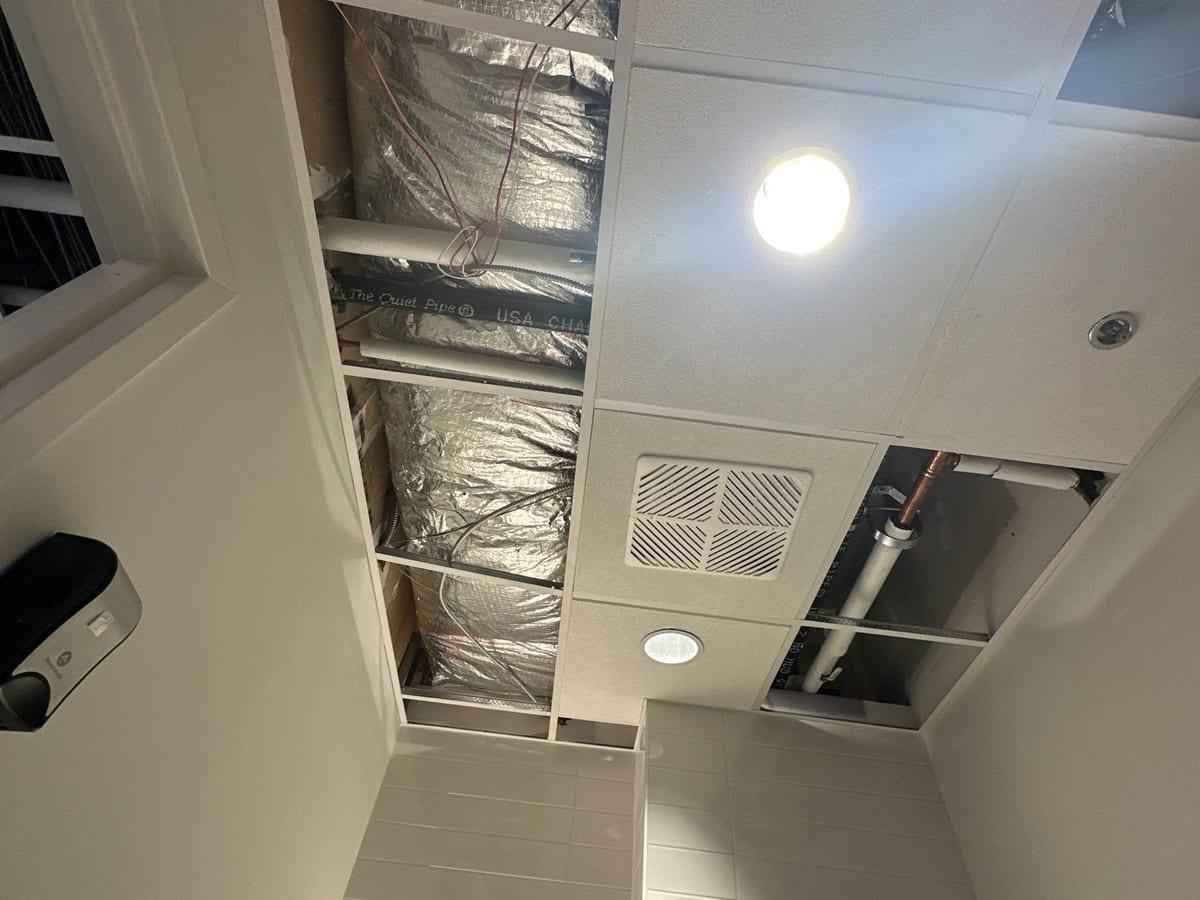
Commercial Restoration Services for Occupied Facilities in Charlotte & Concord, NC
When water, fire, smoke, mold or a storm damages a commercial building, cleanup is only part of the job. The building has to be made safe, the damage has to stop spreading, and the people who run it need to know what comes next. Phantom Restoration provides commercial restoration services in Charlotte & Concord, NC, and across the Charlotte region, for the same kinds of damage we handle in homes: water removal and drying, fire and smoke cleanup, mold remediation and storm water drying.
We work on all kinds of commercial buildings, including offices, shops, restaurants, apartment buildings, churches and warehouses. If you own or manage one, call (980) 501-1879. We answer 24/7 and send a crew as soon as we can. When you call, we'll ask what happened, which areas are affected, whether the building is occupied and who can give us access, so the crew knows what it's walking into.
We're a local company with offices in Concord and Charlotte, in business since 2022, and we'll tell you plainly what we find. Financing is available — ask us for details.
Commercial Damage Assessment When Property Damage Disrupts Operations
The first visit is about safety and scope. We walk the affected areas with whoever is responsible for the building, find where the damage started and how far it spread, and decide what comes first.
Some damage is obvious, like standing water or soot on the walls. Some isn't: water above ceiling tiles, smoke residue in a suite down the hall, mold behind a wall that stayed wet. We use moisture meters and thermal imaging cameras to find water you can't see, and we record what we find from the start.
We don't make structural, electrical or occupancy decisions. If something looks unsafe, we tell you who needs to look at it first.
Stabilize The Building And Reduce Secondary Damage
Secondary damage is what happens after the first event: water wicking up drywall, moisture reaching the next suite, rain coming through a broken window. Stabilizing means stopping that: extracting standing water, setting air movers and dehumidifiers, removing soaked materials that can't be dried, and hanging plastic containment so the damage doesn't reach clean areas. If windows or doors are broken, you may need a glazier or a contractor to secure them.
If water is still coming in, the source has to be shut off and fixed by the right trade first. A plumber fixes the pipe; we handle the water and the drying.
Coordinate Access, Occupant Safety, And Communication
A commercial building involves more people than a house: owners, property managers, tenants, staff and customers. Before the work starts, we agree with you on who can authorize work, how the crew gets in, which areas are off limits and who gets updates. Who uses which areas is your decision, and sometimes the fire department's or the building authority's.
Commercial Restoration Services We Provide
Each type of damage needs its own plan. Here is what we do for each.
Commercial Water Damage Restoration
Burst pipes in a winter freeze, failed supply lines, roof leaks, a fire sprinkler that went off and storm water can all spread across more than one room or floor. We extract standing water, map where it went with moisture meters and thermal imaging cameras, and dry the structure until the readings say it's dry. Read more about commercial water damage restoration in an occupied building.
Commercial Fire And Smoke Damage Restoration
A fire can leave debris, soot on finishes and stock, smoke residue in rooms the fire never reached, and water from firefighting or sprinklers. Once the fire department says it's safe, we remove debris and materials that can't be cleaned, clean soot and smoke residue, and dry the firefighting water. Smoke odor is held in the residue, so cleaning the residue is how we deal with it. See commercial fire damage restoration for how we separate each part of the job.
Commercial Mold Remediation
Mold usually traces back to water: a slow roof leak, a plumbing leak inside a wall, condensation, or a water loss that wasn't dried. We start with a free mold inspection, for businesses as well as homes: we look for visible growth and check moisture. The inspection and our visual findings are free. Testing and surface samples are charged separately, and we give you the price before any sampling is done. Remediation means plastic containment, HEPA air scrubbers running during the work, removal of porous materials that can't be cleaned, cleaning of surfaces that can, and drying. We tell you what's feeding the moisture, because mold comes back if the moisture does. Our commercial mold remediation page covers work zones, shared ventilation and project records.
Commercial Storm Damage Restoration
Summer thunderstorms and the remnants of tropical storms can break windows and doors and push wind-driven rain into ceilings, walls and stock. We extract storm water and dry what it reached. If glass is broken, you may need a glazier or a contractor to secure it. Roof work and tree removal are jobs for other trades. Our commercial storm damage restoration page explains how we trace where the water went.
Planning the Work Around Your Operations
Most owners and managers ask the same question first: can we stay open? Sometimes part of a building can keep running while we work in another part. Sometimes it can't. It depends on where the damage is, which systems it touches, whether there are hazards, and what the people who run the building decide. We'll tell you honestly what can stay open. We can work whenever you allow, including after hours.
Protect Unaffected Areas During Cleanup
The first job is to keep the damage where it is. Where needed, plastic containment separates the work area from the rest of the building, and on mold jobs HEPA air scrubbers capture airborne particles. We keep equipment and debris out of unaffected areas and agree routes in and out with you, so staff, tenants and customers aren't walking through the work.
Prioritize Critical Rooms, Units, And Revenue Areas
A server room, a kitchen, a sales floor, an occupied apartment or a stockroom may matter more than a storage closet. Tell us which areas matter most and we'll talk through the order of work with you. The damage sets some limits: wet materials still have to dry, and some areas can't be used until the work there is done.
Documentation For Owners, Managers, And Insurance Stakeholders
Owners, managers, tenants and adjusters all need the same facts. We work with all insurance companies. We document the damage with photos, moisture readings and drying records and share them with your adjuster. Your policy and your insurance company decide what's covered.
Moisture, Damage, And Progress Documentation
From the first visit, we photograph the affected areas, note where the damage started and what it reached, and record the materials we remove. On water jobs, we take moisture readings room by room and keep drying records until the materials are dry. On fire jobs, we photograph the soot and smoke damage and the areas we clean.
Clear Updates For Property Managers And Decision-Makers
Tell us who should get updates. We'll keep that person informed about where the job stands and what happens next, including anything that changes the plan, such as water in a wall cavity no one knew about.
Commercial Restoration Process and Handoffs
Every commercial job is different, but the work runs in the same order.
1. Emergency Call And Commercial Loss Triage
When you call (980) 501-1879, we ask for the address, what happened, which areas are affected, whether the building is occupied, any safety concerns, how the crew gets in and who can authorize work.
2. Site Inspection And Scope Planning
On site, we walk the affected areas with your contact, check for hazards, find how far water, soot or mold has spread, and decide what comes first. After we inspect, we give you a written scope.
3. Containment, Mitigation, Cleanup, And Drying
Then the work starts: water extraction, containment, removal of materials that can't be dried or cleaned, cleaning of soot, smoke residue or mold, and drying.
4. Monitoring, Documentation, And Communication
While the equipment runs, we check readings, adjust the setup and keep the records current. A room is dry when the readings say so, not when it feels dry.
5. What Happens After Mitigation
Once the space is dry, clean and documented, we also handle repairs after mitigation, such as drywall, flooring and cabinets. Either way, you get the photos and records your adjuster needs. Plumbing, electrical, roofing and HVAC work goes to the right trade, and we'll tell you which one.
How to Evaluate a Commercial Restoration Provider
Whoever you call, a few questions sort out who can actually help:
- Do they answer the phone at any hour? We answer 24/7.
- Where are they based? We have offices in Concord and Charlotte.
- Will they tell you what they don't do? We don't do roof work, plumbing, electrical or HVAC, and we'll say so.
- How do they document the work? With photos, moisture readings and drying records from the first visit.
- Will they put the scope in writing? We give you a written scope after we inspect.
- What do they say about insurance? Be wary of anyone who promises an insurance outcome.
Compare written scopes, not sales pitches.
Get Commercial Restoration Help in Charlotte & Concord, NC
If your business, facility or managed property has water, fire, smoke, mold or storm damage, call Phantom Restoration at (980) 501-1879. We answer 24/7 and send a crew as soon as we can. We'll inspect, explain what we find, start the work that can't wait and give you a written scope.
If it isn't an emergency, reach us through our contact page and tell us what you're dealing with.