
Commercial Mold Remediation for Occupied Facilities in Charlotte & Concord, NC
Mold in a commercial building raises questions a house usually doesn't: which suites or units are affected, whether shared ventilation is involved, who needs to be told, who fixes the moisture and whether the space can stay in use. Phantom Restoration provides commercial mold remediation in Charlotte & Concord, NC, and across the Charlotte region. We find how far the growth goes, contain the work area, remove what can't be cleaned, clean what can, dry the area and tell you what's feeding the moisture.
If you own or manage any kind of commercial property, from an office, shop or restaurant to an apartment building, church or warehouse, we start with a free mold inspection, the same one we offer homeowners: we look for visible growth and check moisture. The inspection and our visual findings are free. Testing and surface samples are charged separately, and we give you the price before any sampling is done. Then we give you a written scope, so you know what comes out, what gets cleaned and how the work area will be set up.
Mold almost always means water: a slow roof leak, a plumbing leak inside a wall, condensation, a damp crawl space, or a water loss that wasn't dried. Humid summers in the Charlotte region make it worse. Removing the growth is half the job. The moisture is the other half.
Planning Mold Work Across Commercial Property Types
We work on all kinds of commercial buildings, and how we set up a mold job depends on how the building is used. These are the questions that usually change the plan:
- Offices: tenant suites, shared walls and ceilings, and ventilation that may serve more than one space. We need to know who controls each area and whether the affected space shares air with occupied ones.
- Shops and restaurants: stock, customer areas and kitchens. Where the growth is, and what's stored near it, decides what has to be protected or moved before work starts.
- Warehouses: stored goods, racking and large open areas, where containment has to fit around how goods move.
- Apartment buildings: access to individual units, common areas such as hallways and laundry rooms, and how the building manager will keep residents informed.
Whatever the building, the people who manage it decide who uses which areas during the work. The EPA's guide to mold remediation in commercial buildings recommends keeping occupants informed throughout, and notes that larger jobs may call for moving some occupants temporarily. We'll plan that with you; we won't decide it for you.
Commercial Mold Remediation Process
Every job is different, but the work follows the same steps:
- Site assessment. We start with a free mold inspection: we look for visible growth and check moisture. We note which rooms and materials are affected and where the moisture is coming from. Mold often extends behind walls or above ceilings, so if we find hidden growth during the work, we tell you and update the scope.
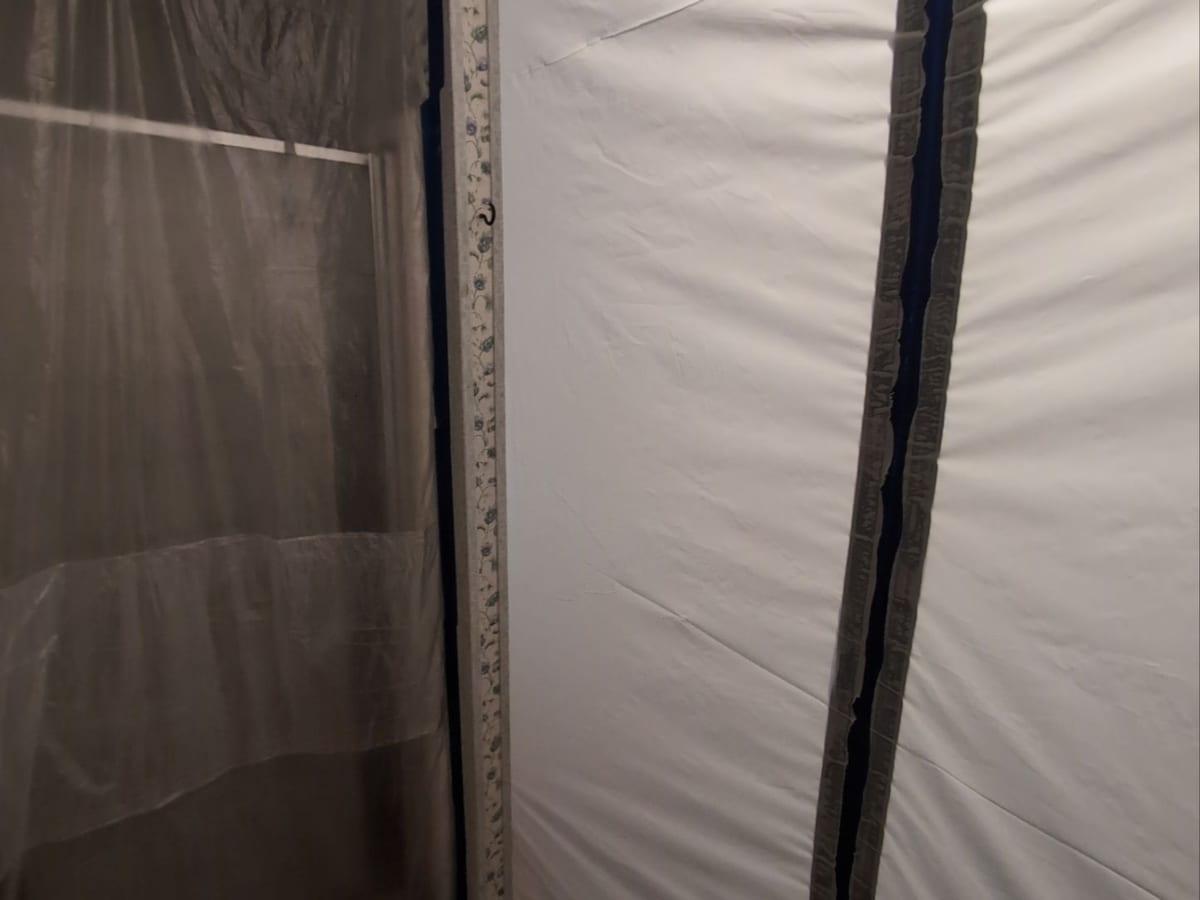
- Containment and work zones. Plastic containment separates the work area from the rest of the building, so dust and spores stay where the work is. We agree with you where the work zone ends, how the crew gets in and out, and which areas stay off limits.
- Removal of affected materials. Porous materials with growth, such as drywall, ceiling tile, insulation and carpet, usually have to come out, because mold grows into them, not just on them. They're bagged and removed.
- HEPA air filtration. HEPA air scrubbers run during the work to capture airborne particles.
- Cleaning. Hard, non-porous surfaces that can be cleaned reliably are cleaned, and the work area gets a detailed final cleaning.
- Drying and moisture. Air movers and dehumidifiers dry what's left, and moisture readings tell us when it's dry. We tell you what's feeding the moisture. Fixing the leaking pipe, the roof or the HVAC problem is work for the right trade, and it has to happen, or the mold can come back.
- Documentation and handover. We go over what we did, what we found and what happens next, with photos and moisture readings for your records.
If the heating and cooling system may be involved, the EPA advises against running a system known or suspected to have mold until it has been checked. Shared ventilation can change where the work zone has to be, so we need to know what serves the affected area before we set up. We don't clean HVAC systems; a qualified HVAC professional handles the system itself.
The same steps are explained in more detail on our main mold remediation page.
Working Around Your Operations During Mold Remediation
Mold work makes dust, needs containment and closes off part of a building while it runs. In an occupied building, the order and timing of that work matter as much as the method.
We can work whenever you allow, including after hours. Before we start, we want to settle three things with whoever manages the building: who approves access to the affected areas, how staff, tenants or residents will be kept informed, and which areas will be restricted while the work is going on. If shared ventilation connects the affected area to occupied space, that may change the plan.
We'll tell you honestly what can stay open. Sometimes the affected area can be closed off while the rest of the building keeps running. Sometimes more of the building is involved than that, and we'll say so before the work starts rather than after.
Documentation, Testing, and Insurance Records
A commercial mold job usually has more than one person who needs the record: an owner, a property manager, an adjuster, sometimes a consultant. Our record covers the moisture we found, the affected materials and areas, the work we agreed, anything we found during the work that changed the plan, and what the area looked like when we finished, with photos and moisture readings.
That record documents our own work. It isn't independent clearance, and it doesn't authorize reopening or settle an insurance claim. The same team inspects and removes mold. If you or your insurance company want independent testing, a third-party assessor can do it. Testing isn't always needed: the EPA says that when mold is visible, sampling is usually unnecessary, though it can help when the source is unclear or someone needs a documented result. Our mold testing page explains how samples are taken.
We work with all insurance companies. We document the damage with photos, moisture readings and records of the work and share them with your adjuster. Your policy and your insurance company decide what's covered.
Once the area is clean, dry and documented, we also handle repairs after mitigation, such as drywall, flooring and cabinets. If the mold followed a recent leak or flood, our commercial water damage restoration page covers the drying side.
Request Commercial Mold Help in Charlotte & Concord, NC
If you manage a building with visible mold, a musty smell you can't trace, or water damage that didn't dry quickly, call Phantom Restoration at (980) 501-1879 or book your free mold inspection. We answer 24/7. Tell us which rooms, suites or floors are affected, what you know about the moisture, any access restrictions and when the space is occupied.
We'll look for visible growth, check moisture, explain what we find and give you a written scope after we inspect. We're a local company with offices in Concord and Charlotte, in business since 2022. For water, fire and storm damage, see our commercial restoration services.