
Water Damage Restoration After Leaks and Floods in Charlotte & Concord, NC
When water gets into your home or business, the first priorities are to stop the spread, remove the standing water and start controlled drying before the damage gets worse. Phantom Restoration provides water damage restoration in Charlotte & Concord, NC for burst pipes, appliance leaks, flooding, sewage backups, storm water and hidden moisture. We inspect the affected areas, begin water mitigation, document the damage and explain what comes next.
We answer 24/7 and send a crew as soon as we can. When you call, we'll ask where the water is, whether it's still running and whether anything electrical is wet, so the crew knows what it's walking into. If it's safe, take photos of the damage before anything is moved.
If water is still coming from a pipe or an appliance, that has to be stopped first. A plumber fixes the pipe; we handle the water and the drying. Crawl spaces are where we started, so we know how water behaves under a house as well as inside it.
What Water Damage Restoration Includes
Water damage restoration is more than mopping up a spill. For us, it covers everything between your first call and the point where your property is dry and the records are in your hands:
- Inspection and moisture detection, using moisture meters and thermal imaging cameras to find how far the water has traveled, including places you can't see.
- Water extraction, which removes standing water from floors, carpet and crawl spaces.
- Water mitigation, the emergency steps that keep the damage from spreading.
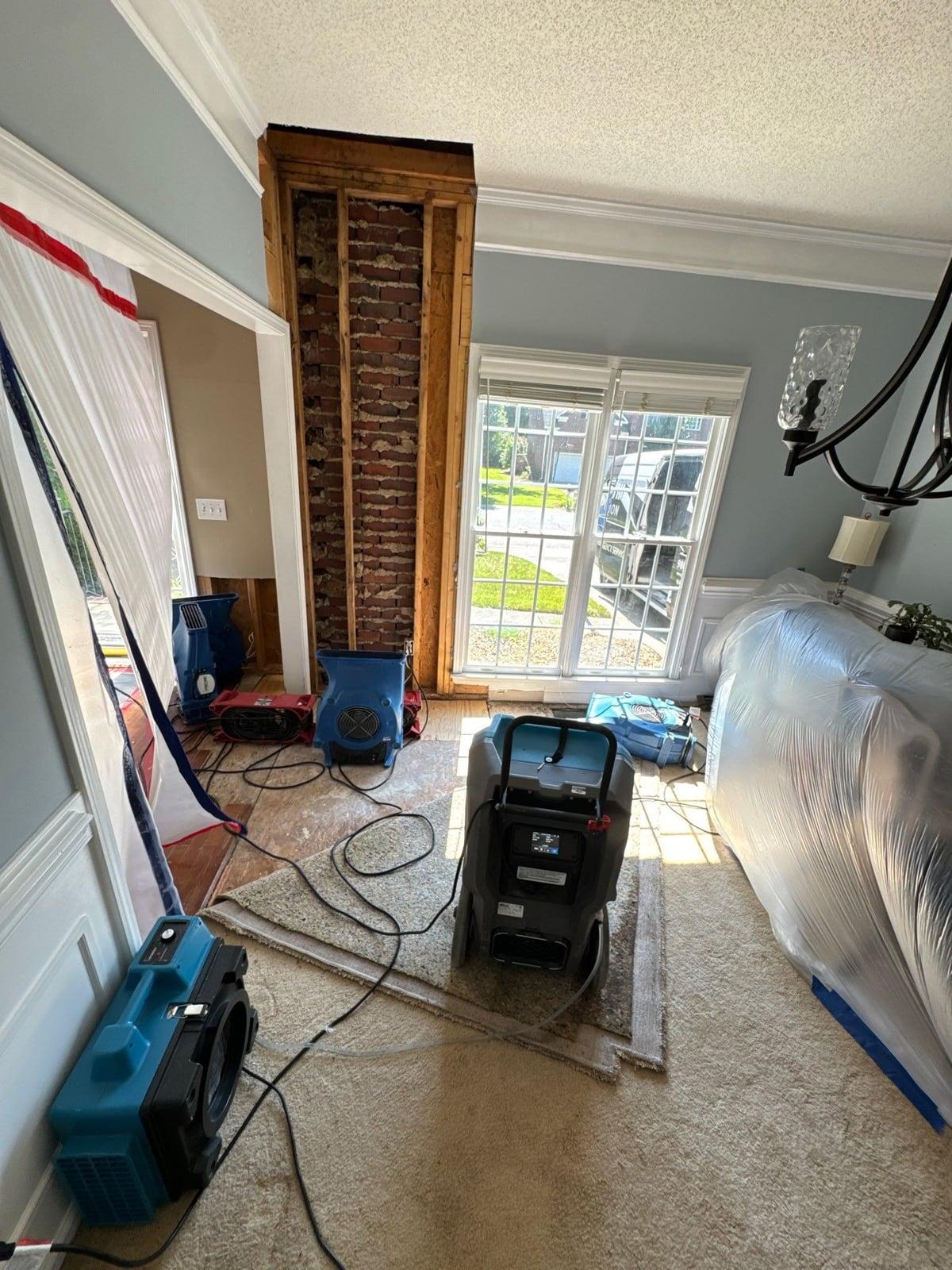
- Structural drying and dehumidification, with air movers and dehumidifiers running until the readings show the materials are dry.
- Cleaning of the surfaces the water touched, and tear-out of materials that can't be dried or cleaned.
- Pack-out of belongings that were in the affected rooms, and pack-in when the work is done.
- Documentation of the loss with photos, moisture readings and drying records.
Once everything is dry and documented, repairs can begin. We give you the drying records your adjuster needs, and we can also handle repairs such as drywall, flooring and cabinets. If you already have a contractor, we'll give them the drying records and work alongside them.
Common Water Damage Problems
Water damage looks different depending on where it starts. These are the situations we see in Charlotte, Concord and the surrounding area, in houses, condos, apartments and rentals, for homeowners, landlords and tenants alike.
Burst Pipes and Plumbing Leaks
Winter freezes split pipes, supply lines fail and slow leaks hide inside walls and under floors, in kitchens, bathrooms and crawl spaces. By the time you see a stain, water may have been spreading for some time. We extract the standing water, find where moisture has traveled and dry the structure. The pipe itself is a plumber's job, and it has to be fixed before drying can hold. Burst pipe cleanup also means checking the ceiling below and the rooms beside the break, because the water rarely stays where the pipe failed.
Appliance Leaks and Overflows
Refrigerator leaks, dishwasher leaks and bathtub overflows are appliance losses we handle. Washing machines, ice makers and water heaters are common sources too. A failed supply line or an overflow can soak flooring, baseboards and cabinets before anyone notices. We don't repair or replace the appliance. We deal with the water it left behind: extraction, checking how far the moisture traveled and setting up drying. Appliance leak cleanup includes checking cabinet bases, baseboards and floor seams around the appliance, because water rarely stays where it landed.
Flooding and Storm Water
Summer thunderstorms and the remnants of tropical storms can put a lot of water on the ground in a short time. Red clay drains slowly, so water sits against foundations and finds its way into crawl spaces, garages and ground-floor rooms. If your home has a basement, a failed sump pump or heavy runoff can flood it as well. We remove the water and dry what it reached. Where that water comes from outside is a separate problem; we deal with the water that got in. When a storm floods several rooms, the job is flood damage restoration on a larger scale. Water under the house or below grade is crawl space flooding or basement flooding, and the work starts with reaching the water safely.
Sewage Backups and Contaminated Water
A sewer backup or another contaminated-water event is a different kind of job. The CDC and EPA both advise treating sewage and floodwater as contaminated, so we handle these as Category 3 losses, with protective handling and a more careful process for removing and cleaning. Stay out of the affected area, and keep children and pets away, until it has been assessed. A sewage cleanup job starts with protective handling and includes removing what can't be cleaned.
Fire Sprinkler and Firefighting Water
Water from a fire sprinkler or a fire hose can reach rooms far from the fire. In a home with sprinklers, one head going off can soak a room and run down into the floor below, and firefighting water soaks walls, ceilings, insulation and subfloors. We extract that water and dry the structure the same way we handle any other loss. Soot, smoke residue and board-up after a fire are a separate part of the job, handled as fire damage restoration.
The Water Mitigation and Restoration Process
Every water damage job follows the same basic sequence, even when the details change from house to house. Here is how it runs, from the first walk-through to the point where the records are in your hands.
Inspection and Moisture Mapping
We start with a walk-through of the affected areas. We ask when the water was found and what it came from, and we check for hazards such as wet electrical equipment or possible sewage. Then we use moisture meters and thermal imaging cameras to check drywall, baseboards, flooring, cabinets and ceilings for moisture you can't see, and we record the readings room by room. That record guides the drying plan and becomes part of your documentation. A water damage inspection also tells us which materials to dry in place and which may have to come out.
Water Extraction
We remove standing water from floors, carpet, crawl spaces and affected rooms with extraction equipment, and from a basement if your home has one. Getting the bulk of the water out first gives the drying equipment less to do. If the water is contaminated, that material is dealt with before drying equipment goes in.
Drying, Dehumidification, and Monitoring
With the standing water gone, we set up air movers to move air across wet surfaces and dehumidifiers to pull moisture out of the air. We take readings throughout the drying period and adjust the equipment as materials dry. A room isn't done when it feels dry; it's done when the readings say so. That phase is structural drying, and it usually takes longer than extraction.
Cleaning, Sanitizing, and Next Steps
After drying, we finish cleaning the affected surfaces and remove the materials that can't be saved. The exact approach depends on the water category and on what the water touched. Sanitizing doesn't replace physical cleaning and drying, so those come first.
Once everything is dry and documented, repairs can begin. We give you the drying records your adjuster needs, and we can also handle repairs such as drywall, flooring and cabinets. If you already have a contractor, we'll give them the drying records and work alongside them.
Structural Drying and Moisture Control
Drying a water-damaged property takes more than removing what you can see. Moisture can stay in drywall, insulation, subfloors, cabinets, trim, carpet pad and framing long after a room looks and feels dry. We set drying goals from moisture readings, not guesswork, and we keep checking until the readings show the materials are dry. We can't promise a drying time in advance, because it depends on the materials and the conditions on site.
Wall, Floor, and Cabinet Drying
Wall cavities, subfloors and cabinets can often be dried in place with air movement and dehumidification. Sometimes saturated material has to come out instead. We don't know which until we've inspected and tracked the readings, so we don't promise to save a specific material before then.
Category 1, Category 2, and Category 3 Water Damage
The category of water changes how we approach a job. Categories describe how contaminated the water is. We decide the category from the source and the conditions we find on site, not from the weather alone, so wind-driven rain isn't automatically Category 3. A category can also change if water sits or reaches contaminated materials.
Category 1 Water
Category 1 is clean water from a source such as a supply line leak or an appliance overflow, without contaminants. Clean water still damages flooring, drywall and cabinets, and it doesn't stay clean if it sits or soaks into materials that are already dirty. That is why the plan starts with an inspection rather than an assumption.
Category 2 Water
Category 2, sometimes called gray water, carries some contamination. Think of dishwasher or washing machine discharge, or a toilet overflow with no sewage in it. It calls for more careful cleaning and more deliberate choices about which materials stay and which come out.
Category 3 Water
Category 3 is grossly contaminated water: sewage, floodwater, or water that picked up contaminants on its way into the building. It needs protective handling, decisions about what has to be removed and thorough cleaning. Carpet, pad and drywall that soaked in it often have to go.
Water Damage, Mold Risk, and Indoor Air Concerns
Moisture control is the main way to lower the chance of mold after a water loss. Charlotte-area summers are humid, and wet materials dry slowly in humid air, so the longer something stays wet, the more conditions favor growth. The EPA advises cleaning and drying wet materials within 24 to 48 hours to limit mold growth. We can't promise mold won't develop after any particular loss, but extraction, monitored drying and removing materials that can't be dried all lower the risk.
If you already see mold or smell a musty odor, that is a different job from a standard water loss, and mold can affect indoor air quality. We offer a free mold inspection: we look for visible growth and check moisture. If mold is found, mold remediation is its own job, separate from the water work.
Insurance Documentation for Water Damage Restoration
We work with all insurance companies. We document the damage with photos, moisture readings and drying records and share them with your adjuster. Your policy and your insurance company decide what's covered.
That record covers the affected rooms, the readings we took and when we took them, the materials involved and what was removed. If it's safe, take your own photos before anything is moved, and keep receipts for emergency costs. We can't tell you what your insurer will decide, but we can make sure the record of the damage is clear from the first visit.
Call Phantom Restoration for Water Damage Restoration in Charlotte & Concord, NC
If water is spreading through your property, don't wait for it to dry on its own. Call (980) 501-1879. We answer 24/7 and send a crew as soon as we can. We'll inspect the damage, remove the water, start drying and document the work, so your adjuster has what they need. When the structure is dry, the same team can do the repairs, or work alongside your own contractor.
We're a local company with offices in Concord and Charlotte, in business since 2022, and we serve homes across the Charlotte region. Financing is available — ask us for details. If it isn't an emergency, you can reach us through our contact page and tell us what you're dealing with.