
Reconstruction Services After Water, Fire, Mold, or Storm Damage in Charlotte & Concord, NC
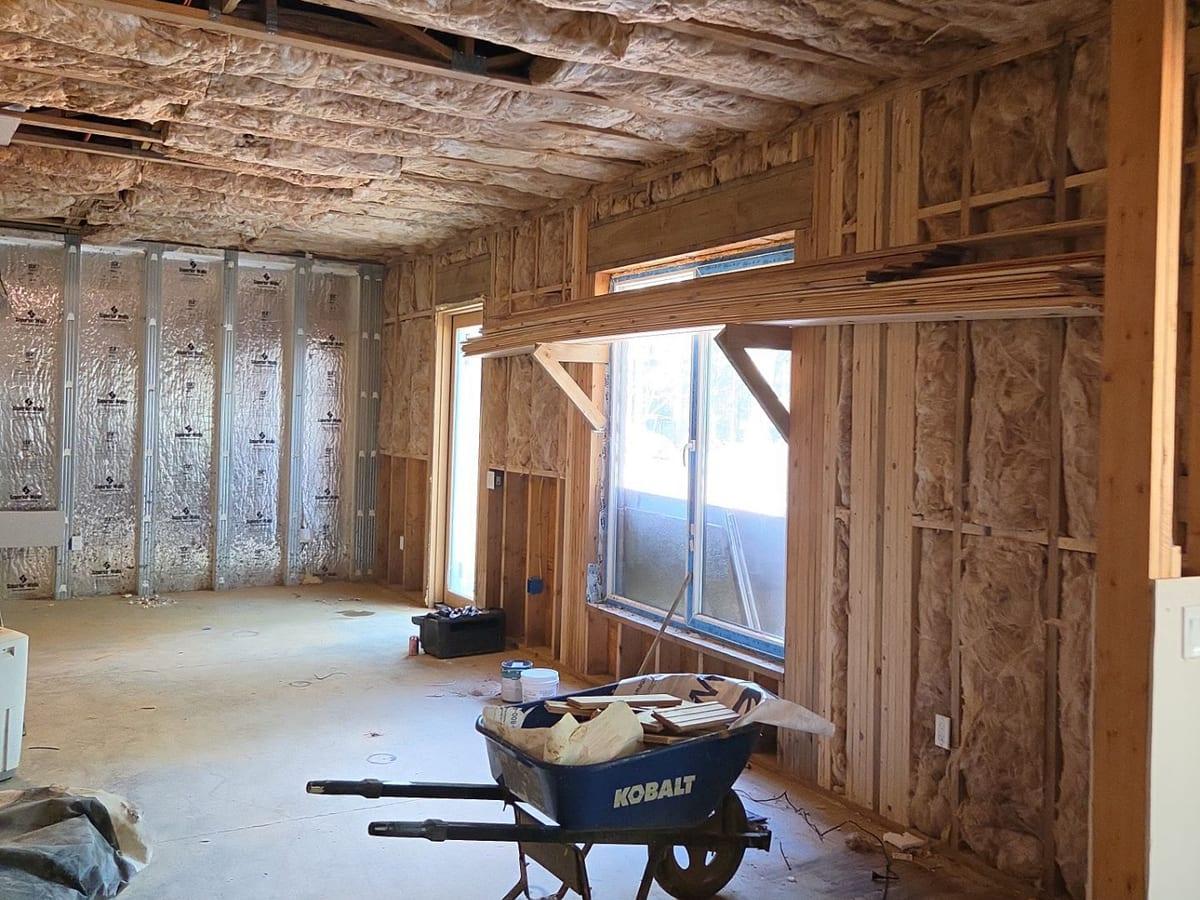
After the water is out, the fire cleanup is finished or the mold is gone, a property is often left with gaps: drywall cut away above a water line, flooring pulled up so the subfloor could dry, a cabinet base that swelled and had to come out. Phantom Restoration provides reconstruction services in Charlotte & Concord, NC, for that stage. We do full reconstruction after water, fire, mold or storm damage, including drywall, insulation, flooring, cabinets, trim and paint.
Reconstruction is the build-back stage. It comes after mitigation, drying, cleanup or remediation, not instead of them. If we handled the emergency, one team takes you from the emergency through the repairs, and the people who opened your walls already know what's behind them. If you already have a contractor, we'll give them the drying records and work alongside them. The choice is yours.
Our work covers the inside of the building, from the insulation behind the walls to the trim and the final coat of paint, and we serve homes and businesses from our offices in Concord and Charlotte.
When Reconstruction Is Needed After Restoration Work
Reconstruction is needed when the emergency work had to take something out, or when something that stayed is too damaged to keep. Common examples:
- Drywall and ceiling sections removed because they were wet, contaminated, moldy or too smoke-damaged to clean.
- Flooring taken up so the layers under it could dry, or flooring that swelled, cupped or came apart.
- Base cabinets and toe-kicks removed so the wall and floor behind them could dry.
- Insulation pulled out of wet, moldy or smoke-damaged walls and ceilings.
- Baseboards and trim taken off so the walls behind them could dry.
- Paint on walls, ceilings and trim where sections were cut out and replaced.
Storm water that came in through a broken window or a roof leak leaves the same kind of damage inside. In every case, the repairs start only after the earlier work is finished.
After Water Damage Mitigation And Structural Drying
Water damage repairs usually follow tear-out: drywall cut away above the wet line, wet insulation removed, flooring lifted so the subfloor could dry. Many homes around Charlotte sit over crawl spaces, so a floor can stay damp from below after the room looks dry, and humid summers slow drying down. That's why repairs wait for the moisture readings, not the calendar. Our water damage restoration work ends with drying records, and the repair plan starts from them.
After Fire, Smoke, Or Soot Damage Cleanup
After a fire, the cleanup removes what can't be cleaned: drywall and ceilings that hold smoke odor, soaked insulation, and flooring and cabinets ruined by firefighting water. Once the soot and residue are cleaned and the property is secured, repairs can start. If the fire damaged framing, joists or the roof structure, that's work for a structural professional, and it has to be settled before we close any walls. Our fire damage restoration work covers the cleanup that comes first.
After Mold Remediation Or Controlled Demolition
Mold remediation often means removing drywall, insulation or flooring inside plastic containment. Repairs come only after the remediation is finished, the moisture source is fixed and the area reads dry. We plan our mold remediation work and the repairs that follow so the walls stay open until that's done.
Reconstruction Services We Provide
Reconstruction covers the building, not the belongings in it. We can pack belongings out before the work and pack them back in when it's done, but we don't restore contents ourselves. Here is the repair work we do.
Drywall, Ceiling, And Wall Repair
Most repair jobs after water damage start with drywall. A small, sound area can sometimes be patched. Larger damage usually means new sheets, cut back to sound drywall so the new piece meets something solid. If insulation had to come out, we replace it before the wall is closed. Then we hang the new drywall, tape and finish the seams, match the texture as closely as the existing surface allows, then prime and paint the repaired area. Ceilings get the same work. Our drywall water damage repair page explains the details.
Repairs After Fire and Smoke Cleanup
After a fire, we replace the insulation, drywall, ceilings, flooring, cabinets and trim the cleanup had to remove, and we paint the repaired areas. Smoke residue on the surfaces that stay is cleaned first, so the repairs always follow the cleanup. If an area still smells of smoke after cleaning, we tell you before we cover it.
Flooring, Trim, Cabinets, And Finish Repairs
Water often reaches the floor first and the cabinets next. We replace flooring in the affected rooms, put back or replace cabinets that had to come out, replace baseboards and other trim, and paint the repaired areas. An exact match with flooring, cabinets or trim that weren't damaged isn't always possible, because materials fade, change and go out of production. We tell you what we can match before the work starts, so the choice of material is yours.
When the Damage Needs Another Trade
Some damage needs a different trade. A plumber fixes the pipe, a roofer fixes the roof, and an electrician deals with wiring that got wet. Damaged framing, joists or foundations are a question for a structural professional. We don't do that work. When we find it, we show you what we found, and we don't close a wall until that work is done.
From Mitigation Scope To Rebuild Plan
A good repair plan starts with what the emergency work found. Before we write a scope, we work through three steps.
Review Damage Documentation And Affected Materials
We start with the record: photos of the damage, moisture readings, drying logs and the list of materials that came out. If we did the emergency work, we already have it. If another company did, ask them for their drying records and photos, and we'll work from those. Then we walk the property and check the records against what we see.
Confirm The Property Is Ready For Build-Back
New drywall and flooring go in only when the water source is fixed, the framing, subfloor and wall cavities read dry, any mold has been remediated and any smoke residue has been cleaned. If a reading is still high, we wait. Closing a wet wall cavity hides the problem, and it can come back as mold.
Create A Practical Repair Scope
Then we write the repair scope: which rooms, which walls, ceilings, floors and cabinets, what goes back, and what isn't included. You get it in writing after we inspect, and you can share it with your adjuster. If something changes once a wall is open, we tell you and update the scope before we go further.
Residential And Commercial Build-Back Support
We repair homes and businesses. The work is the same; the planning differs.
Home Reconstruction After Property Damage
In a home, repairs often happen while you're still living there. We plan the work room by room, keep dust contained to the area we're working in, and tell you which rooms you won't be able to use. Belongings need to be out of the work area before we start. We can pack them out and pack them back in when the repairs are done.
Commercial Reconstruction And Tenant-Space Repairs
In offices, shops and rental units, the question is usually how to keep the business running while the repairs are done. We talk through access and timing with the owner or property manager before work starts, so the repairs can be done area by area where that's possible, and everyone works from the same written scope. For water, fire or mold damage at a business, see our commercial restoration services.
What Reconstruction Does Not Replace
Reconstruction is the last stage, not a shortcut past the others.
Emergency Mitigation Comes First When Damage Is Active
If water is still coming in, a room is still wet, smoke residue is still on the walls or mold is still growing, repairs have to wait. If that's where you are, call us at (980) 501-1879. We answer 24/7, and the emergency work comes first.
Regulated Materials May Require a Qualified Specialist
Some older building materials, such as certain textured ceilings, joint compound and old paint, can contain asbestos or lead. They need testing before anyone cuts into them, and if they test positive, a qualified specialist has to handle them. We don't do that work. If your home is older and the damaged area includes those materials, ask about testing before the repairs are planned.
Our Reconstruction Process
Every repair job is different, but the order is the same.
1. Damage Review And Reconstruction Assessment
We walk the property, review the photos, moisture readings and drying records, and confirm which materials came out and why.
2. Scope, Estimate, And Material Planning
We write up the repair scope and an estimate, confirm material choices with you, and list anything that isn't included.
3. Scheduling the Repairs
We plan the order of work with you. If a plumber or an electrician still has work to finish, that happens before a wall is closed, so we schedule around it.
4. Build-Back And Quality Checks
We replace insulation, hang and finish drywall, replace flooring, cabinets and trim, and paint the repaired areas. Before we close up each area, we check it against the scope.
5. Final Walkthrough
We walk the finished rooms with you, go over what was done and note anything that still needs attention.
Why Choose Phantom Restoration for Reconstruction Services in Charlotte & Concord, NC
We're a local company based in Concord, with a second office in Charlotte, and we've served the Charlotte region since 2022. Most of our work starts with water, fire or mold, so we know what has to be true before a wall is closed.
- One team from the emergency through the repairs, if you want it.
- We work with all insurance companies. We document the damage with photos, moisture readings and drying records and share them with your adjuster. Your policy and your insurance company decide what's covered.
- Financing is available — ask us for details.
Request Reconstruction Services in Charlotte & Concord, NC
If your property has already been through water mitigation, fire cleanup, mold remediation or storm cleanup, call (980) 501-1879 to plan the repairs. Tell us what was damaged and whether you have drying records from another company. We'll look at the property, check that it's ready and give you a written scope.
If the damage is still active, that work comes first. We answer 24/7.